Author: Kevin

Reasons why your furnace keeps freezing up

6 Reasons Your Furnace Keeps Freezing Up

Why Does My Furnace Keep Freezing Up?

There can be several reasons why your furnace keeps freezing up in the winter, including clogged air filters, blocked vents, frozen condensate lines, faulty thermostats, broken blower motors, and improper furnace sizing. Many of these issues restrict airflow, which can cause condensation to freeze inside your furnace. We’ll explore each cause of a frozen furnace, as well as troubleshooting measures, preventative tips, and how Dugan Air can help solve your frozen furnace problems.

Can a Furnace Really Freeze Up in Winter?

Wondering whether a furnace can freeze up in winter? The short answer — absolutely. When temperatures drop below 32°F, problems such as airflow and drainage issues can cause water to freeze before it has time to exit the furnace. This leads to blockages inside the furnace, preventing it from heating your home properly. 

If you’ve noticed your furnace freezing up, it doesn’t mean it’s broken. It could be a simple issue like a clogged air filter or a mechanical issue that an HVAC professional can fix. Our team at Dugan Air offers emergency HVAC support in the greater Indianapolis area, including Greenwood, Franklin, Mooresville, Columbus, and surrounding areas.

6 Common Causes of a Frozen Furnace
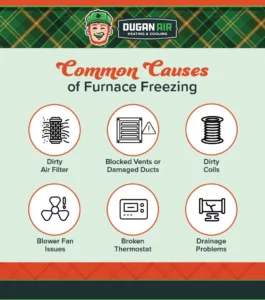
6 Causes of Furnace Freezing

Several issues can cause a frozen furnace, including airflow problems and a faulty thermostat reading. We’ll explore six of the most common causes of a frozen furnace so you can determine what’s getting in the way of a cozy home.

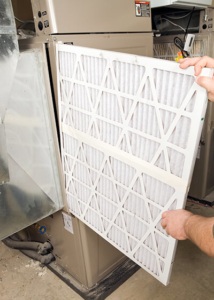
Clogged or dirty air filter restricting airflow

Airflow is essential for your furnace to properly heat your home. When furnace filters become clogged or dirty, it’s harder for air to flow freely, which can lead to condensation building up inside your furnace. In cold weather, this condensation freezes and causes internal furnace problems.

The best way to prevent this is to check your furnace filters once a month and change them every three months (or as recommended by the manufacturer). However, if freezing is already happening, it’s best to call a professional to resolve the problem. 

Closed vents or blocked returns

In some cases, the problem lies outside the furnace itself. When dirty, blocked, or damaged air vents impede proper airflow, condensation is forced to remain within the system, potentially leading to ice buildup. This can even mean that a furnace can start to freeze while it’s running.

Luckily, this is a simple fix. Open the vents and keep furniture and other items away from them. If your ducts are collapsed or damaged, you’ll likely need a professional to replace the damaged parts and get your home heating system back up and running.

Blocked or frozen condensate drain line

Your furnace naturally produces moisture when it runs, which exits the system through the condensate drain line. However, when the line becomes dirty or clogged, moisture can get stuck and freeze inside. This may also occur in lines and pipes that aren’t properly insulated for winter.

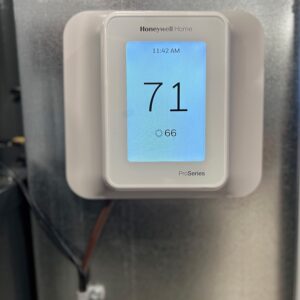
Faulty thermostat

If your HVAC thermostat incorrectly reads the temperature in your home, the furnace will have difficulty maintaining a temperature above freezing in its internal components. This can lead to ice formation wherever condensate forms. 

Furnace tip: If your only problem is a furnace freeze-up, it’s often due to one of these causes. However, if you’re experiencing other furnace problems, such as a faulty pilot light, unusual furnace noises, or an unreliable heat exchanger, there may be a bigger problem. One of our Dugan Air pros can inspect your furnace and provide an expert diagnosis and repair plan.

Blower motor not working properly

The blower motor and fan are also essential parts for proper airflow. Damage or wear on either part can reduce airflow, leading to the formation and freezing of condensation. Since these are internal components, it’s important to call an HVAC technician for professional furnace repair.

Improper furnace sizing 

A furnace that’s too small will run overtime trying to heat the space, which speeds up wear and tear and can lead to breakdowns. A furnace that’s too large will short-cycle, which can lead to various problems, including freezing. A qualified HVAC pro can help you determine the right size of furnace for your home.

In some cases, large amounts of ice buildup can cause damage to your furnace. If your furnace starts to freeze up, it’s important to call a pro and address the problem so it doesn’t lead to costly damage. Frozen furnace repair costs vary and will depend on the cause of the freeze-up.

What To Do If Your Furnace Freezes Up

If a frozen furnace has left you stuck in the cold, try these simple steps for what to do if your furnace freezes up:

Step 1: Remove the ice

Using warm water or warm air, remove the ice from the furnace. This may involve flushing the condensate drain line, which you can do yourself if you’re comfortable.

Step 2: Check the thermostat

Confirm that your thermostat is set to the correct temperature and that there are no heaters or other devices nearby that might throw off the reading. If the thermostat is incorrect or broken, it may even prevent the heater from turning on.

Step 3: Check the filters

Check that your furnace filters are clean and not clogged. In general, it’s best to check your filters once a month and change them every three months (or as recommended by the manufacturer).

Step 4: Check the condenser coil

Check that there’s nothing obstructing the condenser coils, such as old leaves, snow, or debris. 

Step 5: Examine for leaks

Examine the outside of your furnace and check for any signs of visible damage, leaking water, or condensation. As a general rule, don’t open the internal components — if you have to unscrew anything, it’s best left to the pros.

Step 6: Check vents and ducts

Perform a walkthrough of your home to ensure that there are no obstructions blocking the vents and ducts. This may include rugs, furniture, and other things that can prevent proper airflow.

If your furnace keeps freezing even after you try all of these DIY steps, call Dugan Air for emergency furnace repair. Most furnaces last 15 to 20 years, so if you have an older furnace that keeps freezing, it may also be time to consider furnace replacement.

Prevent Furnace Freeze-Ups Before Winter Hits

The greater Indianapolis area can often drop below freezing as early as mid-October. Prevention is key to keeping your furnace from freezing during these cold spells, so try these tips to keep your home cool and comfortable.

Schedule annual maintenance

The best way to prevent your furnace from freezing is to schedule regular maintenance with your trusted local HVAC professionals. It’s recommended to book furnace maintenance at least once a year, ideally in the fall before the heavy-use season begins. Aim to schedule your service earlier, if possible, so you can make sure to avoid the frost/freeze dates in Indiana. 

Stay on top of DIY maintenance

Regularly checking and changing the air filter is key to keeping air flowing easily through your furnace and preventing freeze-ups. It’s also important to gently wipe down the coils to remove dirt and improve airflow.

Consider insulating measures

You can also contact a pro to help you install preventative anti-freezing measures, such as a self-regulating heating cable system around the condensate line.

Call Dugan for Professional Furnace Services

From routine maintenance and anti-freezing prevention to emergency frozen furnace repair, Dugan Air Heating & Cooling is your go-to solution for furnace services in Indiana. Our professional HVAC technicians will assess your issue and give realistic, cost-effective, and long-lasting solutions with no upsells or unnecessary extras. Contact us today to book your next appointment and experience the Dugan difference.

Frequently Asked Questions

Is it normal for HVAC to freeze in the summer?

No. If your HVAC has ice on the inside or outside of the unit, there’s a problem. Schedule service with a professional who can find the cause of the problem and fix it. 

Does low refrigerant cause freeze-up?

Yes. Low refrigerant levels can cause freeze-up in your HVAC system because there’s less pressure inside the coils, making them too cold and causing moisture to freeze. Your HVAC system needs adequate refrigerant to absorb heat and work properly. 

How do you keep the furnace drain from freezing?

The simplest way to keep your furnace drain from freezing is to insulate the pipe with an insulated wrap or a weather-proof sleeve. Also, consider shortening the pipe so the water has a shorter distance to travel (and less time to freeze inside). This helps prevent a high-efficiency furnace condensate line from freezing.

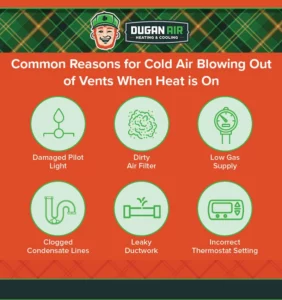
Why is Cold Air Blowing Out of Vents When Heat is On

Why is Cold Air Blowing Out of Vents When the Heat is On?

There’s nothing quite as frustrating as cranking up the thermostat on a chilly evening in Indiana, only to feel cold air rushing through your vents. You’re expecting a cozy, warm home, but you’re left shivering instead. Why is cool air coming out of your vents when the heat is on? Broken components, buildup, or electrical failure can prevent your furnace from functioning correctly, causing temperatures to plummet. Discover the most common reasons cold air is blowing from your vents and the steps you can take to restore warmth to your home.

6 Likely Causes of Cold Air Blowing From the Heater

Below are six issues that could explain why your furnace is blowing cold air. 

Reasons why cold air is blowing out of vents when heat is on

1. The pilot light is damaged

If you have an older furnace, it likely has a gas pilot light that ignites to help warm your home. When the pilot light goes out or gets damaged, your burners can’t produce heat, and your system ends up blowing cool or cold air from your vents instead.

2. The air filter is dirty

When your filter gets clogged with dust, pet hair, and debris, it restricts airflow to your furnace. This causes your system to overheat, and as a safety precaution, it shuts down and stops producing warm air.

3. There’s not enough gas

Your furnace needs a steady supply of gas to ignite the burners and warm the air that flows through your vents. If your gas supply is low, your furnace can’t ignite the burners to warm the air distributed throughout your vents.

4. The condensate lines are clogged 

New, high-efficiency furnaces produce condensation during the heating process. This moisture needs to drain away through condensate lines. When these become clogged, it will prevent the pilot light from igniting, leaving only cool air coming through your vents. This could also be why your furnace is leaking water or freezing up. 

5. There’s a leak in your ductwork

Cracks or holes in your home’s ductwork allow heat to escape from the air before it reaches the vents. 

6. Your thermostat is on the wrong setting

Your thermostat should always be on the ‘auto’ setting rather than ‘on.’ If it’s on the wrong setting, your furnace will run continuously even when it’s not producing heat, causing cold air to blow from your vents.

Troubleshooting Steps When the Heat’s on, but Cold Air Is Coming Out of the Vents

Before calling the Dugan Air HVAC professionals, there are a few tasks you can do yourself if the heat is on but cold air is coming out:

  • Check the thermostat: Make sure it’s set to “heat” and “auto,” and the temperature setting is higher than your current room temperature.
  • Check your air filter: If the air filter is dirty or clogged, replace it with a new one. The best way to check is to hold up the filter to a light. If you can’t see light passing through, it’s time for a replacement.
  • Inspect the pilot light: If you have a gas furnace, check if the pilot light is lit. If it has blown out, carefully relight it following the manufacturer’s instructions.
  • Look at your circuit breaker: Make sure the breaker for your furnace hasn’t tripped. If it has, reset it and see if that solves the furnace problem.
  • Replace your thermostat batteries: If your thermostat isn’t responding, try changing the batteries and recheck the settings.
  • Inspect your heating system: Look for visible signs of damage or malfunction, such as dents, cracks, or error codes, that indicate an issue within the unit.
  • Inspect your vents: Make sure furniture, curtains, or other household items aren’t blocking your supply or return vents.

What not to do

When cold air is blowing from the heater, some tasks are best left to the professionals. Here’s what not to do: 

  • Don’t open furnace panels or access doors: You could expose yourself to dangerous components or void your warranty.
  • Don’t touch the gas valves: Gas-related repairs need to be handled by licensed technicians for your safety.
  • Don’t ignore strange sounds or smells: If you smell gas or hear unusual noises, turn off your system and call a professional immediately.

Heat Pump Blowing Cold Air? Here’s What To Know

If you have a heat pump system, cold air from your vents may not be a problem. Heat pumps work differently from furnaces, and there are a couple of reasons why cool air is completely normal. 

Defrost mode

When it’s cold outside, ice builds up on your heat pump’s outdoor unit. To handle this, your system automatically enters defrost mode, reversing the heating cycle to melt the ice. During this mode, which lasts about 15 minutes, cold air can blow into your rooms. 

Auxiliary heat

When it’s extremely cold outside, a heat pump can struggle to extract heat from the outside air. When this happens, auxiliary or “emergency heat” kicks in. There’s usually a brief delay before this backup heat engages, during which you might feel cooler air.

If you’re feeling consistent cold air from your heat pump, you may need heat pump repairs from Dugan Air. 

Prevent Cold Air Problems With Regular Furnace Maintenance

The best way to avoid cold air surprises from your heating system is with annual maintenance. A licensed technician will inspect, clean, and tune up your system to guarantee it functions properly. Along with regular tune-ups, there are some preventative measures you can take at home to keep your furnace working in top condition:

  • Replace the air filters every one to three months.
  • Schedule regular duct cleanings. 
  • Test your thermostat to ensure it is working correctly, and replace the batteries regularly.
  • Clear the area surrounding your furnace to prevent blockages, fire hazards, or restricted airflow.
  • Check that the pilot light is on and burning with a blue flame. 
  • Take action at the first sign of furnace malfunction. Contacting a professional as soon as you notice an issue will prevent it from worsening and affecting other components.

Join our Premium Clover Club for scheduled heating and cooling maintenance, VIP discounts, and other exclusive benefits.

When To Call a Professional Heating Technician in Johnson County

There are a few instances when your heating system needs to be looked at by the professionals at Dugan Air:

  • Your furnace won’t turn on at all.
  • You’ve replaced the filter and checked the thermostat, but cold air is still blowing.
  • You smell gas in your home.
  • Your furnace may have a cracked heat exchanger. 
  • The pilot light won’t stay lit. 
  • You hear banging, screeching, or rumbling sounds from your furnace.
  • Your carbon monoxide detector goes off.
  • The furnace is cycling on and off more frequently than usual.

Our team at Dugan Air has seen it all, and we’re equipped to diagnose and fix problems quickly and safely. We offer 24/7 heating emergency support for residents in Greenwood, Mooresville, Franklin, Columbus, and surrounding areas.

Fix Your Cold Air Problem With Dugan Air

When DIY troubleshooting doesn’t fix your furnace blowing cold air, Dugan Air is here to help with top-quality heating and cooling services. We combine premium service with a fun, no-shenanigans approach. Contact us today to schedule a heating consultation and fix your cold air problem. 

Frequently Asked Questions 

Does low refrigerant make my heat pump blow cold air?

Yes. When the refrigerant is low, the system can’t absorb and move enough heat. If you think you have low refrigerant, get a Dugan Air tech to inspect your heat pump for a leak.

When should I replace my furnace instead of repairing it?

If your furnace is approaching its 15-year lifespan and facing frequent, costly repairs, consider replacing it. Follow the 50% rule: if repairs are 50% the cost of a new furnace, it’s probably more cost-effective to buy a new one.

Can a bad thermostat cause cold air to blow from vents?

Absolutely. A malfunctioning thermostat can affect the temperature reading, leading the unit to think the house is warmer than it actually is. A bad thermostat can also keep your furnace fan running when it shouldn’t.

A family in warm clothes and blankets sits on a couch, looking cold. Text asks, "Why does my furnace pilot light keep going out?"—perfect for furnace troubleshooting. Dugan Air Heating & Cooling logo above.

Why Does My Furnace Pilot Light Keep Going Out?

Gas furnaces have a small flame called a pilot light that can sometimes go out. Sometimes, it can be re-lit, but if your furnace pilot light keeps going out repeatedly, it could indicate a bigger issue or even a safety hazard. 

Read on to discover why your pilot light might be going out, what you should do if it happens, and when to call the experts at Dugan Air for assistance.

What Does a Furnace Pilot Light Do?

The pilot light in your furnace is a small flame that provides a consistent ignition source. When the thermostat signals the furnace to turn on, the gas valve releases gas and the pilot light ignites it, starting the heating process. 

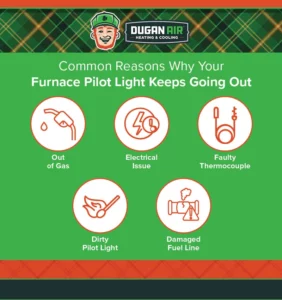
Common Reasons Why Your Furnace Pilot Light Keeps Going Out

Here are some of the most common reasons your pilot light is going out.

Reasons why furnace pilot light keeps going out

You’ve run out of gas

The light needs a consistent supply of gas to stay lit, so a lack of flame may indicate that you’re low on fuel or there’s an issue with the gas supply preventing the gas from reaching the pilot light. 

There’s an electrical issue 

Sometimes, wiring can come loose in your furnace. If this happens, the pilot light won’t light when it needs to. An expert HVAC technician can diagnose this problem. 

You have a faulty thermocouple

If your thermocouple is damaged or not working properly, it will prevent the gas from reaching your pilot light. A faulty thermocouple can be fixed or replaced by a professional.

It’s dirty

Sometimes, the issue is as simple as soot or carbon blocking the fuel line in the pilot light. A quick cleaning might get your pilot back in good working order, but if it keeps going out, call for help.

The fuel line is damaged

If the fuel line is blocked or damaged, gas can’t flow freely, preventing the pilot light from staying lit. The line may need to be professionally cleaned or changed. A damaged gas line can be a serious safety hazard, so if you suspect a gas leak, follow emergency procedures and then call an expert for help.

What To Do When Your Pilot Light Is Out

When your furnace pilot light is out, you should first turn the pilot light reset switch to the OFF position. Wait at least five minutes for the gas to dissipate from the chamber, then turn the knob to PILOT, hold the reset button down, and light the flame. The light should fire up right away and stay steady.

Once the pilot light is relit, turn the gas control back to ON. If it goes out again, it’s time to call for professional furnace servicing.

When To Call a Professional for Pilot Light Issues

When your pilot light keeps going out, your furnace can’t work properly. It may also indicate a serious issue with your gas supply. Call a professional if you smell gas or a rotten egg odor or if the pilot light is split, flickering, weak, or burning yellow or orange instead of blue. 

Preventive Tips to Keep Your Pilot Light Lit

The best way to ensure your pilot light stays lit and your furnace works well year-round is to keep up with preventative maintenance. Scheduling regular service with our HVAC team helps keep your fuel lines clean and allows us to check out all the important parts of your furnace to ensure your pilot light stays lit. You can relax knowing your furnace is ready for another chilly winter and maybe even save some money on your next energy bill. 

Some DIY solutions include ensuring there are no drafty doors or windows near your furnace. If you have a gas furnace, check if you have enough fuel in the tank. If you’re unsure what the issue is, call Dugan Air for assistance.

Call Dugan Air for HVAC Service 

If your furnace pilot light won’t stay lit, contact the team at Dugan. We offer furnace maintenance, repairs, and replacement services throughout the Johnson County area, including Morgantown, Martinsville, Columbus, and Bargersville. Our team cares about our community, and we’ll do everything we can to make sure you and your family stay safe and comfortable in your home year-round. 

Don’t let your old furnace pilot light or a strange furnace noise stress you out. Call us and we’ll fix the problem fast. When it comes to HVAC systems, we offer premium, customer-focused care. If you want to experience the Dugan difference, schedule your service call today and find out why our service stands out from the rest. We’re the HVAC provider that Indiana homeowners trust.

Frequently Asked Questions

How do I know if my thermocouple is bad on my furnace?

If your pilot light ignites but then goes out after you let go of the gas control knob, or if you notice your pilot light keeps going out for no discernible reason, it’s likely a thermocouple issue. It could be dirty or defective. 

Is it easy to replace a thermocouple?

Replacing a thermocouple can take a few hours and involves disconnecting gas lines. This type of job has safety risks, so we recommend calling a professional to replace your furnace thermocouple.

What’s Included in a Premium Furnace Tune-Up From Dugan Air?

As homeowners, ensuring the safety and efficiency of our homes is critical. One integral aspect often overlooked is the regular maintenance of our HVAC systems, especially the furnace.

Beyond just optimizing performance, a Premium Furnace Tune-Up from Dugan Air is a yearly service that can significantly impact the safety of your home. Wondering what’s included in this essential service? Our experts are here to explain:

1. Electrical Safety Check

Dugan Air technician performing an electric check on a furnace

Our experienced technicians conduct a meticulous inspection of all electrical components in your furnace. Identifying and rectifying any issues promptly ensures smooth operation and eliminates potential fire hazards associated with faulty wiring or connections.

2. Refrigerant Check

A Dugan Air HVAC technician walking to replace an HVAC system

A key component of our Premium Tune-Up involves a comprehensive check of your furnace’s refrigerant levels. Proper refrigerant levels are essential for efficient heating and prevent the risk of system malfunctions, ensuring your home stays warm and safe.

[cta_shortcode]

3. Inspection of Critical Components

Dugan technician performing HVAC maintenance outside a home

Every part of your furnace plays a crucial role in its overall functionality. From the heat exchanger to the blower motor, our technicians thoroughly inspect and test each component. Identifying and addressing any wear or damage is vital for preventing breakdowns that could compromise your safety.

4. Drain Check

Dugan Air technician checking drains for clogs

A clogged drain can lead to water damage and mold growth. Our Premium Tune-Up includes a drain check to make sure the condensate drains properly, protecting your home from potential water-related issues.

5. Full Safety Check

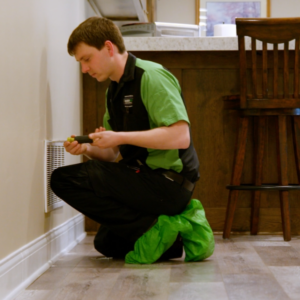
Dugan Air technician screwing a vent covering into the wall

Dugan Air Heating & Cooling’s commitment to safety extends beyond just the furnace. We conduct a comprehensive safety check, ensuring every aspect of your heating system complies with industry standards. This meticulous examination gives you peace of mind to know your home is protected.

Premium Furnace Service From Dugan Air

What sets our Premium Furnace Tune-Up apart is the dedication of our service team. Beyond the checklist, our technicians bring a wealth of experience and a commitment to excellence. Their keen eye for detail and proactive approach guarantee that no potential safety concern goes unnoticed.

[cta_shortcode]

By investing in a Premium Furnace Tune-Up with Dugan Air, homeowners optimize the performance of their heating systems and prioritize the safety of their homes.

Electrical safety, efficient operation, and thorough inspections are the pillars of our service, ensuring your winter stays warm, cozy, and, above all, safe.

Schedule your Premium Furnace Tune-Up today and experience the Dugan Air Difference in home safety and comfort.

Navigating Home Comfort: Should You Repair or Replace Your System?

The decision to repair or replace your home comfort systems is a big one, impacting your immediate comfort and long-term energy costs. Understanding the signs and factors influencing this choice can save you from chilly surprises and financial burdens.

Our team breaks down the pros and cons of both options to help you make the right decision for your family and home.

Signs of a Struggling Home Comfort System

1. Is Age More Than a Number for Your HVAC?

The number 20 indicating the age of an HVAC system

The age of your system is a major factor. Typically, home comfort systems last 10 to 20 years. If yours is approaching this range and showing signs of fatigue, replacement might be more cost-effective in the long run.

2. Utility Bills on the Rise

A phone and tablet displaying expensive energy bills

A sudden spike in utility bills can be a red flag. While seasonal fluctuations are normal, consistent increases might indicate an inefficient system. Modern systems boast higher energy efficiency, making a replacement an investment that pays off over time.

3. Comfort Level of Your Home

A person comfortably sleeping in a chair next to a window

Inconsistent temperatures or frequent breakdowns are frustrating signs of an ailing system. If your home feels more like a game of temperature roulette, investing in a new system can restore equilibrium.

4. Loud, Unexpected Noises Coming From Your System

A person covering their ears from the loud noise of their HVAC system

Unusual sounds from your system, like clanks or whirrs, can signal impending problems. While repairs might address specific issues, persistent noise could indicate a worn-out system needing retirement.

A Balancing Act: Factors To Consider Before Repairing Your Comfort System

Efficiency of Your HVAC Matters

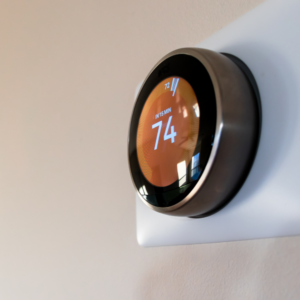
Close-up view of a smart thermostat on a white wall, showing 74 degrees

Newer systems come with advanced technology, offering higher energy efficiency. A more efficient system reduces your carbon footprint and trims down hefty energy bills every month.

Frequent Repairs Add Up

A pile of $10 bills that are spent on HVAC repairs

The financial strain of frequent repairs can sometimes outweigh the cost of a new HVAC system, making replacement a wise choice. While repairs can offer a temporary solution, a pattern of consistent breakdowns may mean your system has reached the end of its reliable life span.

In such cases, investing in a new system provides more efficient and reliable performance and eliminates the ongoing expenses associated with continuous repairs.

Increasing Your Home’s Value

A "For Sale" sign in front of a large white home.

Investing in a new home comfort system can enhance your property’s value. It’s not just about personal comfort; it’s an investment in the resale value and attractiveness of your home. Buyers will be much more likely to offer a higher price if they know the home comfort system was recently replaced.

Technological Benefits of New Systems

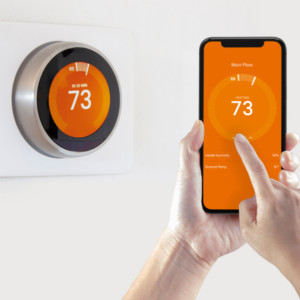
Someone controlling their smart thermostat from their phone

Modern systems come with smart technology, offering remote control and energy management. If you find yourself eyeing these tech-savvy features, it might be the perfect reason for an upgrade.

Seek Professional Guidance for a Second Opinion

Making the final decision between repair and replacement can be daunting. Seeking advice from HVAC professionals, like our seasoned experts at Dugan Air Heating & Cooling, ensures you’ll make an informed choice. Our team evaluates your system’s condition, considers your specific needs, and guides you toward the most cost-effective and efficient solution.

In the end, the choice between repair and replacement is a balancing act. Understanding the signs and considering the factors will empower you to make a decision that ensures a comfortable home and optimal energy efficiency.

Contact our team today to learn more and schedule expert HVAC system repairs or replacements.

Gifts That Keep on Giving: Why a New HVAC System Is the Perfect Present

The holiday season is upon us, and you’re in search of the perfect gift that will bring comfort, joy, and lasting value to your home and family.

While a new gadget or a shiny toy might capture attention for a while, there’s one gift that keeps on giving and truly enhances your quality of life: a new HVAC system. Here, we’ll explore why investing in a new HVAC system is an excellent idea that offers benefits well beyond the holiday season.

    Man happily relaxing on the couch

Comfort All Year

A new HVAC system is the gift of year-round comfort. Whether it’s sweltering heat in the summer or freezing temperatures in the winter, your home’s comfort is essential.

A modern, high-efficiency HVAC system will maintain a consistent and comfortable temperature throughout the seasons, ensuring everyone in your household stays cozy and content.

A stack of bills wrapped in a red bow next to a Christmas tree

Energy Efficiency & Cost Savings

One of the significant advantages of a new HVAC system is its energy efficiency. Modern systems are designed to be eco-friendly and energy-efficient, resulting in lower utility bills. The cost savings over the years mean your gift keeps giving back by reducing your energy expenses.

Plus, some areas offer rebates and tax incentives for upgrading to energy-efficient HVAC systems, making it a gift that keeps on giving in multiple ways.

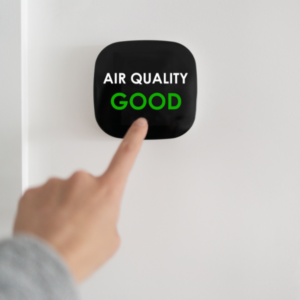
A smart thermostat with Air Quality Good shown on it

Improved Air Quality

An often-overlooked benefit of a new HVAC system is the improvement of indoor air quality. These systems come with advanced filters and air purification technology, removing allergens, dust, and pollutants from the air.

Your family’s health and well-being are priceless gifts, and clean, fresh air can make a significant difference.

Winter-themed graphic of homes that have been sold

Increased Home Value

While you may not be thinking of selling your home right now, a new HVAC system adds to your property’s value. If you ever decide to put your house on the market, a modern, efficient heating and cooling system will be an attractive feature for potential buyers.

It’s an investment that can pay off if you decide to move in the future.

Family reading a book together during the holidays

Peace of Mind

Old HVAC systems can be unpredictable. They might break down at the worst possible moment, leading to costly emergency repairs. By investing in a new system, you’re ensuring peace of mind.

Most new systems come with warranties and maintenance packages, meaning you won’t have to worry about unexpected expenses during the holidays or any other time of the year.

When you want more home comfort, consider the gift to yourself that keeps on giving all year. Our team at Dugan Air are the experts in home comfort. We understand the importance of reliable heating and cooling systems, and we’re dedicated to making your home a haven of comfort, no matter the season.

Contact us today to learn more and schedule HVAC services or installations for your home.

Is a Mitsubishi Ductless System Right for Your Home?

As a Diamond Elite Contractor, Dugan Air is the most qualified installer of Mitsubishi Ductless Comfort Systems in our area. This status, awarded by Mitsubishi, means that customers can trust the quality of the system, as well as the installation and maintenance of your home’s most integral comfort control components. In this blog post, we’ll explore what makes Mitsubishi products the best choice for your home’s unique heating and cooling needs.

 Young woman working from home with a boston terrier dog. Freelancer businesswoman using laptop at sunny room.  Student learning and working at home.

What is a Ductless Heating & Cooling System?

A Ductless heating and cooling system is unlike any other system on the market today. Where window units and traditional HVAC systems are loud, unpredictable, and costly, a Ductless system is quiet, cost-effective, and efficient.

A Ductless Heating & Cooling system, also known as a Split System or Mini-Split, is a type of heating and cooling system that uses two types of units, one indoor that attaches to your home, and as many indoor units as your home needs to achieve your desired comfort level. The outdoor unit consists of a compressor, condenser, and expansion valve. Unlike traditional HVAC systems, Ductless systems do not use ductwork to distribute the cooled air throughout the home. Instead, the cooled air is distributed through strategically placed air handlers, making them a great choice for older homes, and those without existing ductwork. Ductless AC systems offer superior heating and cooling capabilities, improved energy efficiency, and increased indoor comfort levels compared to traditional cooling systems. This type of system is much easier to install than traditional HVAC systems, as they do not require the removal and replacement of your home’s drywall for ductwork, saving homeowners extensive time and money.

What Sets Mitsubishi Ductless Systems Apart?

While you may not realize it, many of your neighbors likely already have a Mitsubishi Ductless System installed in their homes. These quiet, compact, efficient, and customizable systems are rapidly gaining popularity, especially among homeowners who want to upgrade their older homes. Dugan’s unique relationship with Mitsubishi has created a partnership that is benefiting many Indiana homeowners. Dugan has earned Mitsubishi’s Diamond Elite Contractor Status, which means that we are among the top 5 Mitsubishi Ductless Installers in the state.

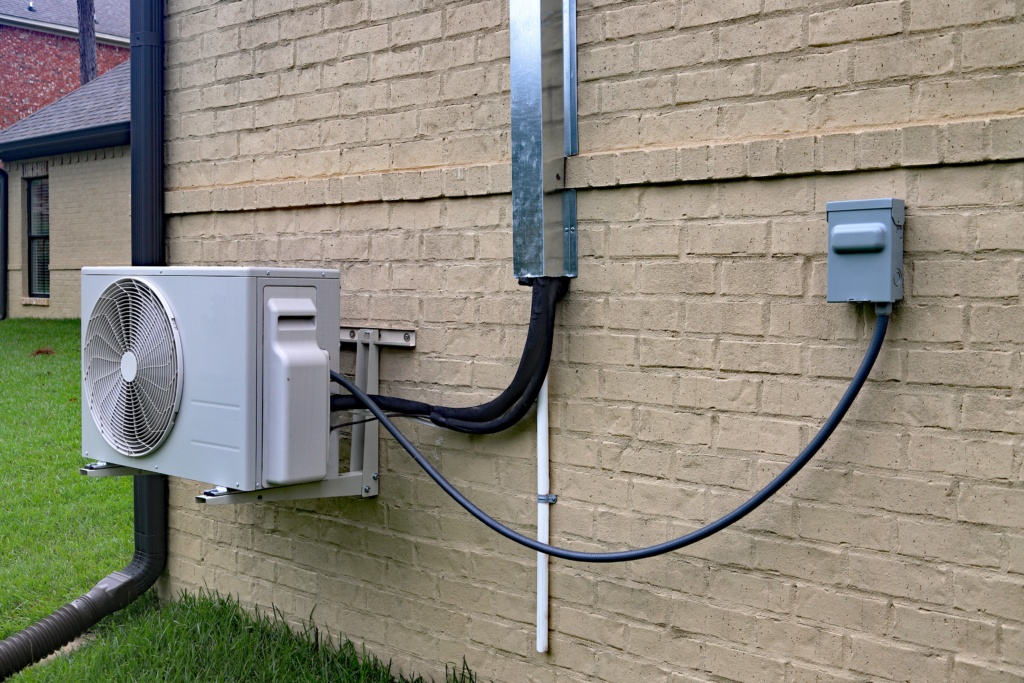
 Air Conditioner mini split system next to home with brick wall

Mitsubishi Electric is a pioneer and leader in ductless technology and continues to be at the forefront of the ductless heating and cooling industry. Dugan is proud to maintain a close affiliation with Mitsubishi Electric and strongly believes Mitsubishi’s award-winning line of top-rated ductless products is the best choice for our customers. For over 35 years, Mitsubishi has been recognized for the masterful craftsmanship and engineering excellence of its ductless air conditioners and heat pumps.

What are the benefits of Ductless?

Ductless A/C offers all of the benefits of a traditional HVAC system, with many additional advantages that are only possible due to the customization and efficiency of Ductless units.

  • Curb Appeal
    One of the major benefits for owners of older homes is the ability to introduce heating and cooling to their older homes without having to demolish their home’s charm and character. Ductless systems are non-invasive; they are easy to install and don’t require the removal of drywall or unsightly components.
  •  
  • Customizable Comfort
    No two people are the same, just like no two temperature preferences are the same. Constant tension over the thermostat can be a daily struggle in many homes. With a Ductless system, every member of the family can choose their own comfort, creating a harmonious home.
  • Cost Savings
    Ductless is a fantastic option for those seeking all of the comforts of a traditional HVAC system, without sky-high installation costs associated with the job. Because ductless systems are so energy efficient, homeowners enjoy the benefits of savings for the lifetime of the unit.
  • SEER Rating
    When it comes to the SEER (Seasonal Energy Efficiency Ratio) rating of home comfort systems, Mitsubishi Ductless can’t be beaten. The higher the SEER rating, the better the unit is able to maximize the heating or cooling while minimizing energy used. Some Mitsubishi Ductless models reach as high as 22 SEER. In comparison, the average SEER rating of a window unit is between 9 and 10 SEER, whereas traditional systems range from 13-18 SEER.

 mini split hanging up in new spacious living room

Ductless systems are being installed in homes across the state of Indiana, and now is the time to do it. Our Dugan team is here to deliver the best in comfort, style, savings, and efficiency. We advocate for these products because we want our customers to experience the luxury of a Ductless system just like our family does. If you’re interested in a Ductless system or want to learn more, call our team today. We’re here to answer any of your questions and get your home ready for comfort!

How Much Does It Cost To Replace Your Home’s Comfort System?

Installing a new home comfort system is a significant investment that can greatly enhance your home’s comfort and energy efficiency. However, understanding the costs associated with such a project is essential for proper budgeting and decision-making.

Let’s dive into the various factors that influence the cost of a new system installation and provide you with a clearer picture of what to expect.

Dugan Air technician installing new AC system next to a home.

Factors Impacting the Cost

1. System type: The type of home comfort system you choose will significantly impact the overall cost. Each system has its own installation requirements, affecting labor and material costs.

2. System size: The size of your home and the required heating or cooling capacity will influence the size of the system you need. A system that’s too small will struggle to meet your comfort needs, while an oversized system can be inefficient and costly. A professional assessment is essential to determine the right size for your home.

3. Efficiency ratings: Home comfort systems come with efficiency ratings such as SEER (seasonal energy efficiency ratio) and AFUE (annual fuel utilization efficiency). Higher-rated systems are more energy-efficient but often come with a higher upfront cost. However, they can lead to long-term savings on energy bills.

4. Ductwork: If your home already has ductwork, it may need to be inspected, repaired, or replaced to accommodate the new system. The condition of your ducts will impact installation costs.

5. Additional features: Upgrades such as programmable thermostats, zoning systems, and air purifiers can add to the cost. These features can enhance your comfort and indoor air quality but may increase the overall expense.

6. Permits and regulations: Obtaining necessary permits and adhering to local building codes can add to the overall cost. Compliance with regulations ensures a safe and efficient installation.

Dugan Air service van on a residential street.

Estimated Costs

While the actual cost of a new system installation can vary widely based on the factors mentioned above, a rough estimate can provide a general idea.

On average, a complete system installation can range from $5,000 to $12,500 or more. This estimate includes equipment, labor, permits, and any additional features.

AC being replaced by a Dugan Air technician.

The Value of Professional Consultation

Given the complexity of comfort system installations and the variables that influence costs, it’s crucial to consult with a professional heating and cooling company. A qualified technician can assess your home’s specific needs, recommend the right system size and type, and provide an accurate cost estimate.

At Dugan Air, we understand that transparency is key when it comes to costs. We offer expert consultations, detailed estimates, and a commitment to delivering value for your investment.

Our team will work closely with you to find the best comfort solution that aligns with your budget and comfort needs.

Contact us for a personalized consultation and take the first step toward a more comfortable and energy-efficient home.

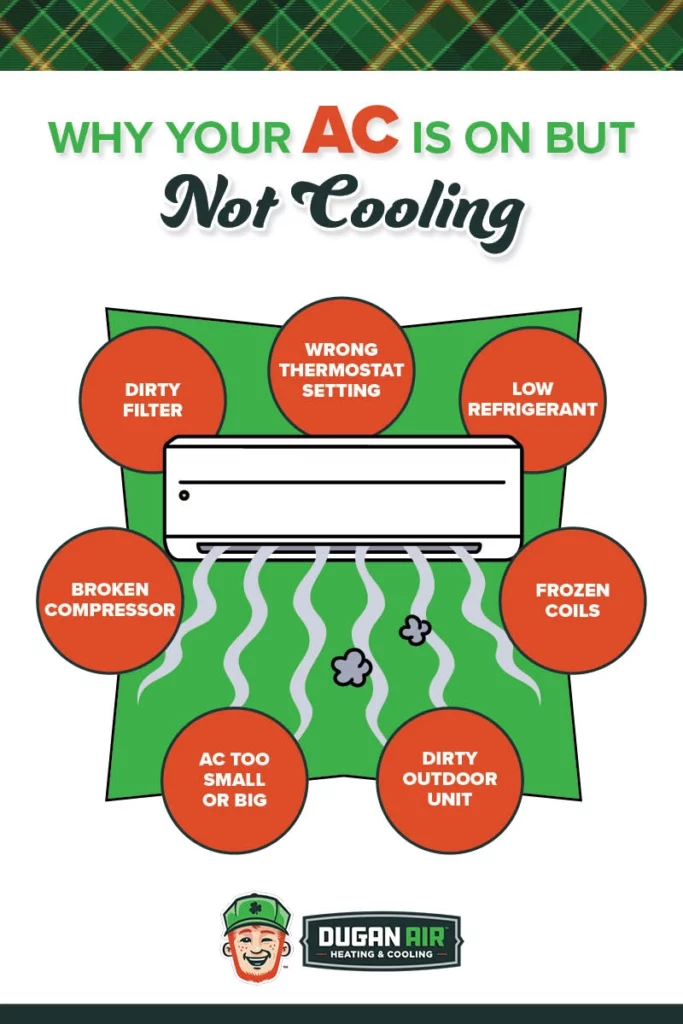
7 Reasons Why Your AC Is Running but Not Cooling

7 Reasons Why Your AC Is Running But Not Cooling

Keeping cool in the summer heat is always a top priority, but what happens when your AC is running yet not cooling your home as effectively as it should? It’s a frustrating and potentially concerning situation, especially during a Columbus heatwave. There are several potential explanations, ranging from simple fixes to more complex mechanical problems.

Explore the top seven reasons your air conditioner isn’t blowing cold air and the steps to take to get your home back to a comfortable temperature.

Seven Reasons Your AC Is Running, but Not Cooling

1. Clogged Air Filter

A common reason your air conditioner may not be cooling is due to dirty filters. Over time, pollen, dust, pet dander, and other particles build up on your filter and obstruct airflow. Your system continues to run, but with significantly decreased cooling capability.

Scheduling annual AC maintenance and regularly changing or cleaning your filters helps take care of this problem. During peak cooling season, change your filter at least once every month. In times of lower use, a new filter every three months should do the trick. If your AC still struggles to cool after cleaning the filters, the issue may lie elsewhere. Ignoring filter maintenance restricts your AC’s cooling capabilities and can lead to bigger and more costly issues within the system.

2. Thermostat Settings Are Incorrect

Your thermostat is the control center of your AC. If it’s set incorrectly or malfunctioning, it may cause your air conditioner to run without actually cooling. An incorrect fan setting is one of the most common culprits. If it’s set to “on” instead of “auto” the fan will keep running without cooling your home. 

thermostat setting

Start by double-checking your thermostat settings. If everything seems in order, but your AC still isn’t cooling, you might be dealing with a faulty thermostat. Fixing the thermostat may be as easy as replacing the batteries, or there may be a bigger issue that requires a complete replacement. If you have a smart thermostat, look for the built-in error codes and system health checks to help pinpoint the issue.

3. Refrigerant Leak or Low Levels

Refrigerant is the substance your air conditioner uses to remove heat from the air inside your house. If levels are low, your AC can’t effectively cool your home. Low levels are often due to a leak in the refrigerant lines, which is not always immediately apparent. The top signs that you may have a refrigerant leak include poor airflow, warm air coming from the vents, and ice forming on the evaporator coils. 

While it may offer a temporary fix, getting someone to simply refill the refrigerant isn’t a long-term solution. The leak will continue to cause levels to drop over time, resulting in recurring cooling issues that put your household at risk. Ongoing refrigerant exposure can cause dizziness, headaches, nausea, and other serious health concerns.

If you suspect falling refrigerant levels, call a professional to locate and repair the leaks, then recharge the refrigerant to the appropriate levels.

4. Frozen Evaporator Coils

Evaporator coils are a key component that help your air conditioner absorb heat from the air. When coils freeze over, they can’t do their job correctly, leaving you with an air conditioner that runs without cooling. Ice buildup on the evaporator coils is often due to restricted airflow, low refrigerant levels, or issues with the blower fan. 

If you notice ice forming on the evaporator coils, turn off your air conditioner to let them thaw. You can also set your system to the “fan” setting and allow it to run until the coils are no longer frozen. Once the ice is gone, assess your AC for dirty filters, improper thermostat settings, or visible damage.

If you’re having trouble identifying the cause of the issue, contact a professional for AC inspection and repair.

5. Dirty Condenser Coils

The condenser unit of your AC, typically located outside, is responsible for releasing the collected heat from your house to the outdoors. However, if the coils get covered in dirt, dust, or debris, it limits their ability to expel heat, impacting your AC’s cooling abilities.

To keep your AC cooling effectively, regularly clean and check the condenser coils to prevent buildup from obstructing its function. Look for grass, leaves, or other debris that could be blocking airflow. If the coils appear dirty, gently rinse them with a hose. If clearing off the coils doesn’t help, there may be problems stemming from internal parts of the unit, like a failing fan motor, which require professional attention.

6. Incorrectly Sized AC Unit

A correctly sized air conditioner is key to keeping your home comfortable. An AC that’s too small for the space struggles to cool, running consistently without ever reaching the desired temperature. Similarly, an oversized air conditioner cycles on and off too frequently, impacting its ability to dehumidify the air and making the space feel less comfortable.

Dugan Air HVAC Technician

If you’ve ruled out other potential issues and your AC is still not cooling, it may be worth consulting with a professional to see if your AC is the right size for your home. Upgrading or downsizing to a more suitable unit could improve comfort, reduce energy waste, and extend the service life of your HVAC system.

7. Faulty Compressor

The compressor is the heart of your AC system, pressurizing the refrigerant to make the entire cooling process possible. If the compressor begins to fail, your air conditioner might still run but won’t keep your home cool. If you notice warm air blowing from the vents, strange noises coming from the unit, or constantly tripping circuit breakers, a faulty compressor is likely the cause.

If you suspect a compressor issue, you’ll need to seek professional help. Compressor problems are complex and require technical expertise to diagnose and fix. Depending on the severity of the situation, the compressor may even need a complete replacement.

Should You Repair or Replace Your Air Conditioner?

Knowing the reason why your air conditioner isn’t cooling helps determine whether repair or replacement is necessary. While minor issues like a dirty filter or incorrect thermostat settings are a quick fix, others may require a complete replacement. 

If your air conditioner is over 10 years old, constantly in need of repair, or struggles to keep up with your cooling needs, replacement is likely the most effective solution. Upgrading to a new, high-efficiency air conditioner means fewer repairs and reduced energy usage, helping you save money in the long run. 

Call Dugan for AC Repair in Columbus

If your air conditioner is struggling to cool your Indiana home, call the experts at Dugan for professional AC repair. We’ll inspect your system to determine the cause of your cooling issues and offer the most effective solution. Whether your air conditioner requires repair or replacement, you can count on our team for 5-star service and lasting results. 

Call us or book online to schedule AC repair in Columbus and surrounding areas today! We also provide new construction installations, maintenance programs, emergency services, and more to help with all your HVAC needs.

The Truth About Whole-House Dehumidifiers

High-quality, whole-house dehumidifiers combat the hot and humid summers we experience in Franklin, IN. A dehumidification system removes the excess moisture from the air, creating a more comfortable home environment. It can also make your air conditioning system more efficient.

As professional HVAC technicians, our team at Dugan Air Heating & Cooling has seen the power of what these systems can do. Yes, they really work. Moreover, they provide more benefits than most homeowners expect.

What Whole-House Dehumidifiers Do

Our experience has taught us an important lesson: not all whole-house dehumidifiers are the same. Our team trusts the AprilAire brand. One of the models we recommend for many homes in the Franklin area is the AprilAire Dehumidifier Model 1850. This system can remove up to 11.9 gallons of water per day from your home’s air. It connects to a home’s existing HVAC system, making for a smooth installation process.

We’ve found that this model is efficient at what it does, removing the right amount of humidity to keep a residence comfortable. At the same time, it’s a very low-maintenance option. Homeowners will need a professional HVAC technician to come in once a year to clean or replace the filter. They won’t need to remove messy trays or perform any other kinds of maintenance. This is an excellent option for people who want cleaner and dryer air in their homes without any extra work.

The Benefits of Whole-House Dehumidifiers

A whole-house dehumidifier is going to remove excess moisture from your air. What you might not realize is just how much of a difference that can make in your home’s comfort levels.

Achieve Healthier Air Quality

Excess humidity leads to problems like bacterial growth, mold, and mildew. When these are present in your home, you breathe in irritants like mold spores daily. This is particularly common along basement walls or baseboards

With a central air conditioner, these spores are then spread throughout the home. For many people, this leads to health problems like allergies and headaches. A dehumidifier removes the humidity, minimizing the presence of these irritants. That leads to improved indoor air quality.

Protect Your Home and Belongings

Other common issues with excess home humidity include peeling paint and warped wood. The moisture in the air makes wood soft, and over time, that creates unwanted wear and tear on your furniture. Proper humidity control creates a better environment for your home’s structure and belongings.

Lower Your Energy Bills and Protect Your HVAC System

Your home’s HVAC system is doing its utmost to create the ideal indoor air quality for your home. While your air conditioning unit’s primary job is to cool your residence, it will also be forced to remove excess moisture from the air to the best of its ability. Because it wasn’t built to do this task, your air conditioner suffers under these conditions with intense wear and tear on the equipment. An overworked air conditioning unit has a shorter life span and requires more frequent maintenance and repairs. It also uses a lot more energy, which raises your utility bills.

Another benefit of dehumidification is that it can make the same temperature feel more comfortable. That allows you to raise the thermostat in summer a few degrees. If your home has an overabundance of moisture in the air, investing in a whole-house dehumidifier can reduce your monthly utility bills and lengthen the life span of your air conditioning unit.

Turn to the Experts for Professional Humidity Control

High levels of moisture make your home an uncomfortable space to be in. Fortunately, whole-house dehumidifiers are a trusted solution that can improve your home’s comfort levels, lower energy bills, and give you peace of mind

At Dugan Air Heating & Cooling, we feel fortunate to have built a strong reputation with the community in and around Franklin. Our premium services include top-tier humidifiers and dehumidifiers, providing homeowners with ideal home comfort. We also provide other air quality solutions like air filters, purifiers, and UV lights. Additionally, we offer our customers furnace and AC installation, repairs, and regular maintenance.

If you’re ready to make a change and take control of the humidity levels in your home, we’d be proud to assist you. Contact us at Dugan Air Heating & Cooling today to learn more.

Schedule Now

"*" indicates required fields

This field is for validation purposes and should be left unchanged.