Author: Kevin

How Does a Ductless Heat Pump Work

Ductless heat pumps, which are sometimes called ductless mini-splits, transfers heat into or out of your Franklin, IN, home. Like a regular heat pump, the outdoor unit has a reversing valve that allows it to transfer heat out of your home in the summertime. It heats your home in the wintertime and cools it in the summertime, but it doesn’t require any ductwork to deliver the warmed or cooled air. Installing these systems requires specific expertise, and our team at Dugan Heating Cooling is the right choice. Knowing how these systems work and their benefits will help you make an informed decision about your comfort.

Parts of a Ductless Heat Pump

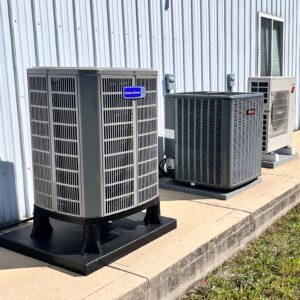
Ductless heat pumps have an outdoor condenser and compressor unit that looks and functions the same way as a heat pump that requires air ducts to deliver the warmed or cooled air. They also have indoor units. The indoor unit is also called the air handling unit.

Types of Ductless Heat Pumps

There are two types of ductless heat pumps. A single-zone ductless heat pump has one indoor unit connected to the outdoor unit. One thermostat controls the system. There are also zoned ductless heat pumps. The zoned systems allow you to have multiple indoor units. This type of system involves a custom design and setup for your particular home. There is one indoor unit for each zone. You might set up your living room, dining room and kitchen to be a zone, the main bedroom and bathroom to be a zone and the secondary bedrooms to be the third zone. Outdoor units for zoned systems can accept three to six connections with indoor units.

How a Ductless Heat Pump Works

Ductless heat pumps contain a chemical refrigerant. This refrigerant is capable of absorbing heat energy from the air. When the heat pump is set to the heating function, it absorbs heat from the outdoor air. The compressor pressurizes the refrigerant and pumps it into the indoor unit. The coil in the indoor unit releases the heat from the refrigerant. This energy transfer warms your home during the wintertime. The cooled refrigerant is pumped back to the outdoor unit, completing the heating cycle.

In the summertime, the cycle reverses. The heat pump’s reversing valve makes this possible. The indoor unit’s coil absorbs heat from your home’s air. It condenses the refrigerant and pumps it to the outdoor unit. The moisture from the warm air in your home also condenses. It turns from water vapor into water. The condensate line drains the water out of your home. The outdoor unit’s coil functions as the evaporator, and it releases the heat from your home into the outdoor air. This completes a cooling cycle. The cooled refrigerant can then be pumped back into your home to absorb more heat.

The indoor unit has a small fan. It can be mounted on your wall or ceiling, preferably away from a window or any heat-generating appliance. The fan pushes the heated or cooled air through your living space. Its unit also contains a small filter. You’ll need to check the filter monthly and clean or replace it when it’s dirty. Avoid waiting more than three months between filter changes for your ductless heat pump.

Benefits of a Ductless Heat Pump

According to the Department of Energy, leaky air ducts can waste up to 30% of the heated or cooled air. With no ducts, your heat pump will operate more efficiently. Your energy bills will be lower, especially during the peak heating or cooling season. Ductless heat pumps make less noise. The expansion and contraction of the metal ducts can get quite noisy in some homes. Ductless heat pumps set up with multiple comfort zones allow you to customize the temperature in each area. If you like it cool while you sleep, but another household member likes their bedroom to be warmer, you can both be happy by setting each zone’s thermostat to each person’s comfort preferences. Ductless heat pumps conserve energy, and they’re compatible with smart thermostats.

At Dugan Heating Cooling, we’re the trusted installation team for heat pumps. We also repair, maintain and install other heating and cooling systems. Our smart thermostats help you save money and optimize your comfort. We’re available 24/7 for emergency heating and cooling repairs. For more details about ductless heat pumps, get in touch with us at Dugan Heating Cooling today.

What is a Smart Thermostat and Will it Save Money?

If you’re tired of paying higher and higher heating and cooling costs every month, you’re probably wondering what you can do about it. Instead of piling on the blankets or wearing layers of sweaters, you could invest in a smart thermostat. These intelligent devices are compatible with most heating and air conditioning systems manufactured in the past five years. If you’ve recently upgraded your heating and cooling system or plan to do so soon, it’s important to know what a smart thermostat is and how it can help you lower your Franklin, IN, home’s heating and air conditioning costs.

What Is a Smart Thermostat?

A smart thermostat is a type of programmable device that connects to your home’s Wi-Fi network. Once you have it connected to your Wi-Fi, it’s able to communicate with your smart home control system and your smartphone. Smart thermostat manufacturers each have their own app that you can download to your phone or tablet and use to control the thermostat. The smart thermostat also communicates with your home’s heating, ventilation and air conditioning system both through a hardwired connection and with the Wi-Fi network.

How a Smart Thermostat Works

Smart thermostats use algorithms to carefully time heating and cooling cycles. They do this through two key methods. The first is with the schedule you program into its interface. The scheduling functions are similar to a standard programmable thermostat. You set the temperature for each period of the day. Most have options for morning, daytime, evening and overnight time periods. There are also options to set different temperatures for different days of the week. If your schedule Monday through Friday is different from your weekend schedule, you can enter this into the thermostat.

The second method used by the smart thermostat is geofencing. It communicates with your phone, using GPS information to determine where you are. If your phone is several miles away from home, such as if you have to work later than usual, the thermostat adjusts the timing of the heating or cooling cycles to account for your location. It won’t adjust the temperature until the geofencing application recognizes that you’re within a 1- to a 2-mile range of your house. Through your Wi-Fi connection, the thermostat automatically downloads software and algorithm updates to provide you with the most up-to-date functionality.

How to Use a Smart Thermostat

To use a smart thermostat, program your preferred temperatures for each time of the day and day of the week. Download the app to your smartphone, tablet or other device that you take with you when you leave home. If you’ll be running late, you can use the app to adjust your home’s temperature. If your smart thermostat has the geofencing feature, it will automatically do this for you.

Convenient Features of Smart Thermostats

Many smart thermostats have learning functions. With sensors in your home, they learn your typical pattern of activity. They can determine if you usually sleep in on the weekends, and they’ll adjust the timing of heating and cooling cycles in order to reduce energy consumption. They also learn from your interactions with the thermostat. If you tend to lower the thermostat on summer evenings or raise it on winter mornings, it will learn this and make the adjustments for you. If you forget to update the thermostat when you’re on vacation, the app allows you to do so with vacation and away settings.

Ways a Smart Thermostat Saves Money

Smart thermostats keep your home warmer for as long as possible in the summer and cooler for as long as possible in the winter. By triggering fewer cooling or heating cycles, they reduce your home’s energy use. They also carefully time the heating and cooling cycles to coincide with your schedule. By matching the times you’re at home, the thermostat minimizes the energy used to heat or cool an empty house. You won’t have to make manual adjustments or worry about forgetting to raise or lower the thermostat.

At Dugan Heating Cooling, we’re the trusted team to install, maintain and repair smart thermostats. You can also turn to us for heating and air conditioning maintenance plans, repairs, replacements and installations. Our heat pumps and ductless air conditioning and heat pump systems are designed to improve your comfort and lower your expenses. To learn more about smart thermostats and how they’ll benefit your Franklin home, get in touch with us at Dugan Heating Cooling today.

Benefits of Energy Efficient Heating Systems

6 Benefits of Installing an Energy-Efficient Heating System

The winter months are quite cold in Franklin, IN, with temperatures dipping into the 20s, so it’s important to have a heating system that warms your home as efficiently as possible. If you’re like many customers who are tired of paying more every month for home heating costs, energy-efficient heating systems offer a solution.

The Importance of Energy Efficiency in Heating

Energy-efficient heating systems help reduce your energy consumption significantly. Not only will you save on monthly utility bills, but you’ll also leave a smaller carbon footprint behind. These systems also improve comfort levels in your home by minimizing wasted heat without compromising warmth. You’ll receive more heat while using less energy as you contribute to a more sustainable world. 

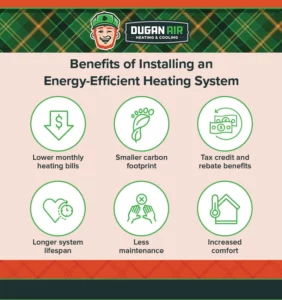
Here are six important benefits of installing a new, energy-efficient heating system in your home.

Benefits of installing energy-efficient heating system

1. Lower monthly heating bills

Switching to an energy-efficient heating system can help you significantly lower your monthly heating bills. During the winter, you may see savings of anywhere from $20 to $50 per month, which equates to thousands of dollars over the lifespan of your new system. Replacing your ductwork also helps you save by preventing the heated air from leaking and being wasted. 

If you plan to get a new heating system, consider duct repair, sealing, or replacement to help you save even more money. Other ways to save include sealing small gaps and cracks around your home’s windows and door frames to prevent leaks. Aside from lower monthly heating bills, a new energy-efficient heating system may increase your home’s resale value if you decide to sell it in the future.

2. Smaller carbon footprint

Thanks to a better understanding of how energy impacts our environment, many people today are concerned about their household’s energy use. A smaller carbon footprint and a lower environmental impact are some of the biggest benefits of choosing efficient Energy Star heating systems. These eco-friendly systems require less energy to heat your home, so you’ll use fewer fossil fuels while emitting less carbon dioxide each heating season.

3. Tax credit and rebate benefits

If you choose to install Energy Star heat pumps in your home, you’ll receive up to $3,200 annually thanks to new federal income tax credits. These tax credits are available to homeowners through 2032 and help lower the cost of these new energy-efficient upgrades by up to 30%. 

A modified and extended Residential Clean Energy credit is also available. This tax credit provides a 30% income tax credit for clean energy equipment, including rooftop solar, wind energy, geothermal heat pumps, and more, through 2032. The credit will be reduced to 22% in 2033 and 2034.

4. Longer system lifespan

The startup cycle on your home’s heating system creates wear and tear on moving parts and key electrical components. However, energy-efficient heating systems perform fewer of these cycles over their lifespans. As a result, parts like the capacitor are less likely to fail, as they’re responsible for delivering a large load of electricity to start the heating system’s compressor or air handler motor.

Excessive starting and stopping wears out your heating system over time. Since most energy-efficient systems operate at lower speeds, it puts less stress on these integral moving parts. Parts like the fan, compressor, and belts on energy-efficient heating systems tend to last longer, giving your system a longer lifespan overall.

5. Less maintenance

Today’s modern furnaces and heat pumps are designed to be more user-friendly. They’re also sealed better than older heating systems, so less dust and debris get into the interior and impact valuable components. By upgrading to an energy-efficient system, you’ll reduce the need for maintenance and repair calls, saving you time and money. 

Energy-efficient heating systems also use better controls allowing for precision climate control with less fuss. That said, you’ll still need to check the air filter monthly, replace it at least once every three months, and get an annual tune-up to protect your investment. Check your system’s SEER rating to find out how energy-efficient it is.

6. Increased comfort

Not only do energy-efficient heating systems use less energy, but they’re also designed to improve the indoor comfort of your home. Variable-speed compressors operate at a lower speed for a longer period to provide more consistent delivery of warm air to the rooms inside your home. 

Other features like energy recovery ventilators capture the heat from flue gases and use it to heat fresh incoming air. This ventilator also retains moisture from indoor air, preventing excessive dryness during the winter months. Keeping your indoor humidity level between 30% and 50% helps you feel more comfortable, lowers your risk of nose, skin, throat, and eye irritations, and reduces your risk of respiratory infection.

Contact Dugan Air Heating & Cooling Today

At Dugan Air Heating & Cooling, we deliver top-notch HVAC services to our customers in the Franklin area. It’s easy to schedule an appointment. We embrace a fun, friendly approach to heating and cooling services so you can “Experience the Dugan Difference.” If you’re interested in a new energy-efficient heating system, contact us today! 

Frequently Asked Questions

What makes a heating system efficient?

A heating system is energy-efficient when it uses energy wisely and converts energy to fuel in an effective, sustainable way. Energy Star-rated systems are approved by the EPA to be some of the most energy-efficient options available.

Which systems are considered to be energy efficient?

Heat pumps, particularly geothermal ones, are some of the most energy-efficient heating systems available. Other more energy-efficient options include gas and oil furnaces and boilers. 

Is Closing Vents in Unused Rooms a Reasonable Money-Saving Plan?

Responsible homeowners want to save money, as they should. No reason exists for anyone to throw away money due to waste and inefficiency. An HVAC system with an old filter, for example, won’t operate efficiently and could drive up monthly bills significantly. Changing a dirty filter represents a standard cost-cutting measure that few would argue against. The same would be true of installing a programmable thermostat or weatherstripping doors and windows.

What about closing air vents in unused rooms? Would taking such steps have any noticeable effect? Ironically, they may deliver a result, but not the one you want.

What Does an Air Vent Do?

As far as purpose, you could say an air vent does little more than provide a cover to a “hole” in the wall. A furnace or air conditioner sends hot or cold air through the ducts, and the ducts allow the air to enter a home through the vents. These are sometimes referred to as supply vents. Other vents, known as return vents, allow air to travel out as well.

Opening or closing the vents remains an option for a homeowner. Some may close the vents in an unused room to save some cash. After all, why heat or cool an empty room? The question makes sense and deserves a reliable answer. However, closing the vents might not do much.

The Furnace Runs

When you set the thermostat to a particular setting, the HVAC system then works to meet the demand. If you want to raise the temperature to 65 degrees, the furnace heats the air and blows the air through the ducts. The ducts then deliver the air to each room when the air comes through the vents. Closing a vent won’t have any impact on how the furnace operates. Don’t expect to save any money because the amount of air produced and circulated by the HVAC system doesn’t change. Closing the air vents may even deliver the opposite of the intended effect.

An Unfortunate Effect of Leaky Systems

When the air travels through the ducts to a closed vent, the air ends up forced back up the partial duct and into the ductwork. Now, the air travels through the other areas of ductwork and to the next vents. An unforeseen issue may occur here: the air could get lost through leaking or loosened ducts.

Air intended for an old bedroom returns to the ducts and heads to the kitchen — the ducts connected to the kitchen present loose seals. Now, the air that would have gone into the bedroom leaks through the imperfections in the system. In short, avoidable energy waste now occurs.

The furnace might even work a bit harder to make up for the lost air. Whenever a furnace experiences additional work, it can drive up heating bills. You could say the same thing of air conditioners and cooling bills.

Perhaps maintaining the HVAC system through routine maintenance would be a better way to save money. At Dugan Air Heating Cooling, we want Franklin and surrounding area residents to know someone could help them with HVAC requests. Furnace and air conditioning repair work are two popular services we offer.

Troubles With the HVAC Arise

Closing one or two vents might not seem like a “big deal,” but the HVAC system may disagree. The potential exists that the coils may freeze, a direct result of restricted airflow. Problems with the coils, compressor, and even the heat exchanger may occur. Any damage inflicted on these parts may cause serious problems, and fixing the issues comes with added costs.

A tragic irony appears here: someone closes air vents to save money and now must pay significant sums to cover repair costs. Not only did no one save any money, but added costs also contributed to losing money.

Condensation may increase as well. With condensation comes the potential for mold growth. Now, removal steps must occur to get rid of the mold, which means more costs.

Closing vents doesn’t seem to serve any purpose. Homeowners should think twice about closing them.

Dugan Air Heating Cooling stands at the ready to help with furnace requests, along with any heat pump or ductless heat pump services. We’ve been in business for 14 years and offer emergency services. Contact our customer care desk today.

Should You Cover Your AC or Heat Pump in the Winter

Should You Cover Your Heat Pump or AC in the Winter?

As summer ends and temperatures drop, the Dugan Air Heating & Cooling technicians always receive the same question from customers: Should they prepare for fall or winter by covering their outdoor AC or heat pump system? The quick answer is no, you don’t need to cover your AC unit in winter, but there are a few exceptions. 

Your outdoor units are made to endure the elements, including freezing temperatures and snow. Covering your AC unit or heat pump in the winter could risk significant damage to your home’s heating or cooling system. 

Dugan Air is here to solve your HVAC problems. If you’re wondering how to prepare for the next cold snap, contact us to assess your HVAC system and help you winterize your home.

Should You Cover a Heat Pump in Winter?

In most cases, you don’t need to cover your heat pump in winter. Even though it seems vulnerable to snow, rain, and freezing temperatures, the unit is designed to be outside and will defrost itself automatically.

When Should You Cover Your AC Unit?

AC units outside

An air condenser unit is built to withstand cold temperatures, rain and other harsh elements from the moment it is installed on your property. Covering it is unlikely to to impact how well it runs when you turn it on again in the spring, and can cause potential issues. Covering your AC can trap any moisture already in the unit, leading to rust and corrosion of the internal coils. This is what can turn into a larger issue over time if left unchecked.

The only exception to the no-covering rule is during the fall, you may want to briefly cover your system to protect it from leaves, twigs, and other debris from entering. However, there are certain wraps that cover just the top of your AC made for this exact purpose, which is favorable over using a full cover.

Best Ways To Protect Your AC Unit From Snow and Ice

The best way to protect your AC unit from snow is to keep it clear, dust it off after a big snowfall, and shovel away drifts to prevent damage. Some people put up a snow fence or a wooden awning to protect the AC from falling snow, ice, and debris. However, a cover is not generally recommended and may even void your warranty.

The outdoor part of your air conditioner was specifically made to stay outside, even in harsh winter weather. To make sure everything is working properly, consider an annual maintenance call before you turn it back on in the spring. 

How To Protect Your Heat Pump During Winter

If you’re wondering how to protect your heat pump in the winter months, the best thing you can do is keep drifting debris, leaves, or snow away from the outdoor unit to prevent blocking airflow. If you notice a large amount of ice forming on your heat pump, clear it away as soon as possible. 

Stick to a regular maintenance schedule to keep your heat pump in top condition. A skilled HVAC technician from Dugan will clean and inspect the heat pump and make sure you’re ready for winter. 

The Risks of Covering Your AC or Heat Pump Unit

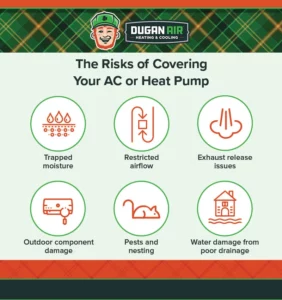
The risks of covering your AC or heat pump include:

Risks of covering your AC or heat pump

  • Trapped moisture, leading to mold, mildew, and rust damage
  • Restricted airflow making the heat pump work too hard
  • Issues with exhaust release
  • Damage to the outdoor components 
  • Creating a hospital environment for pests/nesting
  • Prevent melting ice or snow from draining away from the heat pump during its defrost cycle, causing water damage

Do’s and Don’ts of Covering Outdoor AC Unit

If you decide to cover your AC unit for winter, remember the following:

  • Make sure the cover you use doesn’t have entry points for rodents or small animals. They tend to be attracted to covered air condenser units because they offer shelter from the harsh Indiana winter weather conditions and they will chew on electrical wires.
  • Use a breathable material to cover the air conditioner.
  • Only cover the top six inches of the unit, not the entire thing.
  • Check if the air conditioner manufacturer sells a weather shield that fits the condenser properly.
  • Don’t leave the cover on longer than necessary.
  • Don’t run the air conditioner when the condenser is covered. 

When Covering an AC or Heat Pump Might Make Sense

The only exception to the no-covering rule is during the fall. You may want to briefly cover your system to stop leaves, twigs, and other debris from entering. There are certain short wraps that cover just the top of your AC that are made for this exact purpose. This is favorable over using a full cover.

The cover itself doesn’t have to be expensive to be effective. In many cases, putting a piece of cardboard over the top of the condenser is enough to protect it from snow, ice, or falling debris.

Call Dugan Air With All Your HVAC Questions

Your outdoor HVAC system should run efficiently through the winter without a cover. If your heat doesn’t kick back in after the defrost cycle finishes, or if you’re having issues heating your home, give us a call and we’ll find the cause of the issue and fix it for you fast. 

Our HVAC technicians are known for delivering reliable, expert solutions throughout Franklin and nearby communities. If you join our Clover Club, you’ll receive priority service, special discounts, no overtime fees, and other benefits. 

If you need help keeping your heating or cooling systems in working condition, schedule an appointment today! We’ll also install a humidifier, repair a broken air conditioner, or install or maintain your home’s thermostat.

Frequently Asked Questions 

How do I protect my heat pump in cold weather?

Clear excess snow and ice from the heat pump, and if you wish, build a fence or awning nearby to keep the unit clear. As long as it’s in good working order, your heat pump will automatically defrost when necessary. 

What happens if a heat pump gets covered in snow?

Snow blocking the air vents reduces the system’s efficiency. Blocked vents make the heat pump work harder to heat your home, which can damage the unit over time. 

Does covering an AC unit help?

In most cases, covering an AC unit doesn’t help. Some people like to cover the top of their air conditioner during the fall to keep out leaves and debris, but this is not necessary. 

Schedule Now

"*" indicates required fields

This field is for validation purposes and should be left unchanged.