Author: Kevin

how long do ac units last

How Long Should an AC Unit Last Before It Needs Repairs?

An air conditioning system is one of the most critical components of home comfort, especially during the hot summer months. But like any piece of mechanical equipment, AC units don’t last forever. At some point, wear and tear catch up, and homeowners are left wondering, how long do AC units last? This Dugan Air AC installation guide breaks down the lifespan of various AC components, signs of aging systems, and how to get the most life out of your air conditioner.
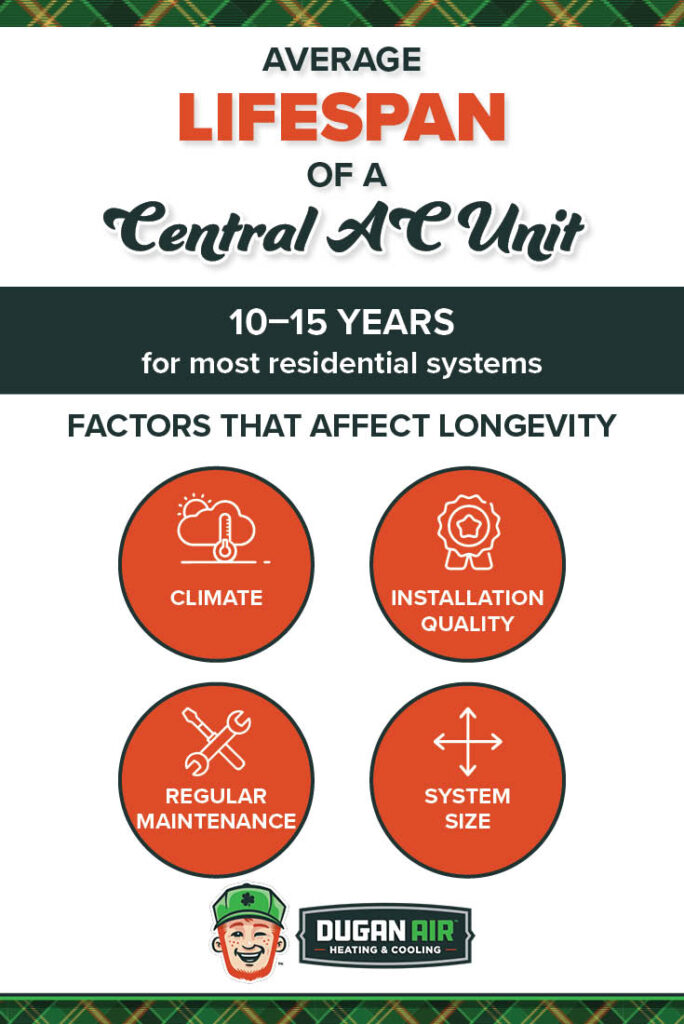
Infographic showing average AC unit lifespan of 10–15 years, with factors affecting longevity: climate, installation quality, regular air conditioner maintenance, and system size.

What’s the Average Lifespan of an AC Unit?

Understanding the average lifespan of an AC unit, what affects its longevity, and when repairs are no longer enough can help you plan for maintenance and replacements wisely. 

Most residential central air conditioning units last between 10 and 15 years, depending on usage, maintenance, and build quality. However, several factors can influence this range, including:

  • Climate: Hotter regions, like the southern U.S., where residents often run their AC, year-round, tend to wear out systems faster.
  • Installation quality: Improper installation can shorten the life of a unit due to inefficiencies or poor airflow.
  • Regular maintenance: Annual tune-ups and filter changes can significantly extend the life of your system.
  • System size: An oversized or undersized unit can cycle improperly and age more quickly.

In general, if your AC is around 10 years old, running nonstop, running but not cooling, and you’re facing frequent repairs or higher utility bills, it may be time to start planning for a replacement.

How Long Does an AC Compressor Typically Last?

The compressor is the heart of your air conditioning system. It circulates refrigerant between the indoor and outdoor units, allowing the system to remove heat from your home. Since it performs such a crucial function, the compressor’s health plays a significant role in the overall longevity of your AC unit. A failing compressor could be why your unit is blowing warm air.

If you’re wondering how long does an AC compressor last, a well-maintained AC compressor can last 10 to 15 years. However, once the compressor fails, repairs can be costly. A compressor replacement can sometimes cost as much as a new unit, especially if the warranty has expired. Factors that affect compressor lifespan:

  • Low refrigerant levels: These can cause the compressor to overheat.
  • Electrical issues: Power surges or faulty wiring can damage the compressor.
  • Dirty coils and filters: These reduce system efficiency and increase compressor strain.
  • Poor airflow: Can cause short cycling, which wears the compressor out prematurely.

If your compressor goes bad near the end of your unit’s lifespan, it’s often more economical to replace the entire AC system rather than repair it.

Signs Your Air Conditioner Is Reaching the End of Its Lifespan

As your AC unit ages, it will give you warning signs that it’s no longer performing as it should. Catching these early can help you avoid a midsummer breakdown and make smarter financial decisions about repairs versus replacement. Be on the lookout for:

  • Frequent breakdowns: If your unit is breaking down multiple times a year, it’s a sign of deeper mechanical failure or aging components.
  • Rising energy bills: If your energy consumption hasn’t changed but your electric bill is going up, your AC could be the culprit.
  • Inconsistent cooling: If the system struggles to keep up during the hottest days, it may no longer have the capacity it once did.
  • Strange noises or smells: Grinding, squealing, or buzzing noises often point to worn-out components. Musty smells may indicate mold in the ducts or unit.
  • The unit is over 10 years old: Even if it’s still running, an older unit may be on borrowed time, especially if it’s using outdated refrigerant. 

If your unit is approaching the end of its lifespan and you’re unsure what steps to take, consider having an HVAC technician perform a performance evaluation. These evaluations can measure output, airflow, refrigerant levels, and temperature differentials to determine whether your AC is still operating efficiently or is nearing the end of its lifespan.

How To Extend the Life of Your AC System

Consistent maintenance and proper usage habits are the best way to avoid premature AC failure. Here’s how to maximize your air conditioner’s life expectancy:

  • Schedule annual tune-ups: Have a certified HVAC technician inspect, clean, and service your unit at least once a year.
  • Change air filters regularly: A dirty air filter restricts airflow, forcing your system to work harder.
  • Keep the outdoor unit clear: Remove debris like leaves and grass clippings from around the condenser to ensure adequate airflow.
  • Install a programmable thermostat: A smart thermostat can adjust temperatures automatically based on your schedule.
  • Seal ductwork and insulate: Sealing and insulating can improve efficiency and reduce strain on your unit.

Consider joining a maintenance plan with Dugan Air. These plans often include seasonal tune-ups, repair discounts, and priority service during emergencies.

AC Repair vs. Replacement: When Is It Time To Upgrade?

Eventually, you’ll face the decision: Is it worth repairing your AC again, or should you replace it altogether? Here’s how to weigh the pros and cons.

Consider repair if:

  • Your unit is under 8 years old.
  • Repairs are infrequent and relatively minor.
  • The system is still under warranty.
  • Your energy bills are stable.

Consider replacement if:

  • Your unit is over 10–15 years old.
  • You’ve had multiple repairs in the last 1 to 2 years.
  • Repair costs exceed 30–50% of the price of a new unit.
  • Your home still uses R-22 refrigerant.
  • Your system struggles to cool your home evenly.

The $5,000 Rule

Multiply the cost of the repair by the system’s age. If the total exceeds $5,000, replacement is usually the smarter investment. For example, a $600 repair on a 10-year-old unit equals $6,000 — it’s probably time to consider an upgrade. 

Dugan understands the need to budget for large home purchases. For this reason, we have partnered with GreenSky® to provide financing options to help you manage the cost of a new AC system. 

On top of this, the United States’ Energy Star program has a tax credit for upgrading your HVAC system. 

Schedule an AC Inspection or Installation with Dugan 

Being proactive — through maintenance, early repair, and thoughtful replacement decisions — will save you money, prevent emergency breakdowns, and ensure your home stays cool for years to come. 

If you’re unsure where your current AC system stands, schedule an inspection with a trusted HVAC professional who can guide you toward the right solution. We provide top-quality heating and cooling services with a unique blend of premium service and a fun, no-shenanigans approach. Contact Dugan Air today. 

ac making strange noise

What That Strange AC Noise Could Mean (and When to Call a Pro)

If you live anywhere near Franklin, IN, or the city of Columbus, IN, you know how important it is to have a reliable air conditioner during the summer months. Occasionally, you may notice that your AC makes noises whenever it’s on. If your AC is making a strange noise, understanding what that noise means is essential to determine the cause. The experts at Dugan Air Heating and Cooling have some tips and information about some of the most common strange AC noises, what they could mean, and when to call a pro.

An illustrated technician checks an air conditioning unit; four red circles list AC noise issues: odors, strange AC sounds, vibrating or rattling, and suspected refrigerant leak—call a pro if you notice any of these signs.

Banging or Clanking

If the loud noise from your AC sounds like banging or clanking, it’s certainly cause for concern. Listen carefully for banging or clanking sounds when the unit turns off, because these sounds are particularly concerning and a major red flag. Here’s what a banging or clanking sound coming from your AC could mean:

  • Compressor issues: A banging sound could be related to loose or broken parts inside the compressor, like a connector rod, springs, or screws and is usually common when the AC turns off. 
  • Problems with the fan: Clanking or banging sounds may be due to unbalanced or loose fan blades, or they could simply be due to debris caught inside the fan.
  • Ductwork problems: Loud banging noises coming from your ductwork may indicate that the metal is just expanding and contracting as air travels through it.
  • Refrigerant issues: A banging or clanking sound could be caused by low refrigerant levels.

Buzzing Noise From Your AC

Buzzing sounds coming from your AC are something you shouldn’t ignore. This unnerving sound could be caused by several different issues. If you hear a buzzing or rattling sound, it’s best to turn your AC off and schedule a repair before the issue gets worse. 

  • Electrical issues: If your AC is making noise that resembles buzzing, it might be due to electrical arcing, problems with electrical connections, circuit breaker issues, or a faulty contractor relay switch.
  • Faulty compressor: The compressor pressurizes and cools refrigerant, and if it’s malfunctioning, it could create a strange buzzing noise.
  • Mechanical issues: Loose parts like loose fan blades or a faulty condenser fan motor may lead to your AC making odd buzzing sounds. 
  • Airflow issues: A dirty air filter or clogged vents restrict airflow, which forces your AC to work harder and could create a mild buzzing noise.
  • Frozen coils: When the evaporator coils freeze, they can cause buzzing sounds due to ice and restricted airflow.

AC Making Rattling Sounds

If your AC is making a weird noise that sounds like rattling, don’t ignore it. Here are some of the most common causes for air conditioner rattling sounds:

  • Loose parts: Any loose parts like screws and other hardware or loose panels will naturally cause a rattling sound, and the looser they become, the louder the sound will be.
  • Fan issues: If the AC fan becomes damaged or misaligned, it will start to make an unsettling rattling sound when the unit is operating.
  • Faulty components: A faulty or malfunctioning motor or compressor can cause rattling noises that occur whenever your AC starts or whenever it’s running.

Hissing or Whistling

Not only are hissing or whistling sounds annoying, but they’re also a sign that your air conditioner needs attention. These noises could be due to a variety of underlying issues, like:.

  • Refrigerant leak: Most refrigerant leaks start to hiss or whistle if the leak is located near the compressor, as the pressure inside of the compressor forces the refrigerant to escape.
  • Leaky ducts: Any gaps or cracks in your air ducts allow air to escape, which may create a hissing or whistling sound.
  •  Valve issues: The AC valve regulates refrigerant pressure, but if it’s damaged or malfunctioning, it will allow the refrigerant to escape and cause the hissing noise.
  • Low airflow: If your air conditioner has to work harder to pull air through the system due to insufficient airflow, it may produce a whistling or hissing sound.

Screeching or Squealing

Loud screeching or squealing noises are not something you should ignore if they’re coming from your AC. These noises could indicate an assortment of serious issues that need professional attention.

  • Compressor issues: If the compressor’s pulley or clutch is faulty, it can cause squealing, and loud screeching noises may mean the compressor is failing.
  • Condenser fan problems: Any worn or damaged parts, such as fan belts, bearings, or the fan itself, can create annoying squealing noises.
  • High humidity: As indoor humidity levels rise, it causes various parts like belts to expand and contract, causing a squealing sound.
  • Other causes: Some other causes of AC screeching or squealing sounds include a failing capacitor, worn isolation feet, or a refrigerant leak.

When To Call a Pro for AC Noise Issues

The most common reason that your AC makes weird noises is due to a loose part, a broken or malfunctioning part, or a refrigerant leak. While certain mild noises are completely normal, others require the help of a trained HVAC professional. Here’s when you should call a pro for your AC noise issues.

  • Noise accompanied by odors: If you hear unusual noises and smell unpleasant, musty odors or a burning smell, you should call a pro to diagnose and repair the problem right away.
  • Constant clicking: An unstoppable clicking noise frequently signals a serious electrical problem that only an experienced professional should handle.
  • Vibrating or rattling noises: If your AC is making rattling sounds or vibrating, and the problem seems to get worse as time goes on, we recommend calling us to schedule a repair.
  • You suspect a refrigerant leak: Refrigerant leaks should only be addressed by trained HVAC professionals, so it’s always best to schedule a repair the instant you suspect that your air conditioner might have a refrigerant leak.

These are just some examples, but we highly recommend that you call a pro whenever your air conditioner starts to make loud noises or unusual sounds you don’t recognize. 

How To Prevent AC Noises in the First Place

Fortunately, there are things you can do to prevent AC noises in the first place.

  • Schedule routine maintenance: Regular AC maintenance is the best way to make sure that your air conditioner is running smoothly, all components are in good condition, and that you catch problems early before they turn into costly, stressful breakdowns.
  • Change the filter: A dirty air filter restricts airflow, which can cause noises, so make sure you change the filter as recommended by the manufacturer, or more often if it’s dirty.
  • Monitor components: Inspect your AC’s major components regularly to make sure they’re properly lubricated and tightened to prevent loud noises.
  • Add soundproofing: Special blankets designed for specific components and acoustic panels provide extra soundproofing against common air conditioner noises. 

Contact Dugan Air Today!

If your AC is making strange noises, you don’t have to sit and wonder what’s causing it. The experts at Dugan Air Heating and Cooling are available to help you address all of your AC concerns in the Franklin and Columbus, IN areas and beyond with a no-nonsense approach to service that’s always free of gimmicks. To learn more about our services or to schedule an appointment for repairs, contact us today!

AC Can't Keep Up with the Heat

Why is My AC Struggling to Keep Up with the Heat?

Your air conditioner may have to work harder when temperatures reach into the 90s during the Indiana summer heatwaves, but it’s not normal for it to run constantly, or to struggle to maintain a consistent, comfortable indoor temperature. Your HVAC system should be installed and sized correctly, with enough power to keep your space cool no matter what it’s like outside. 

At Dugan Air Heating and Cooling, we provide Premium HVAC services and friendly customer service, giving our Indiana customers fast, high-quality care and keeping them cool on the hottest days. If your AC can’t keep up with the heat, give us a call and Experience the Dugan Difference, with honest, personalized service you can trust. We’ll come take a look ASAP, and fix the problem for you at your earliest convenience.

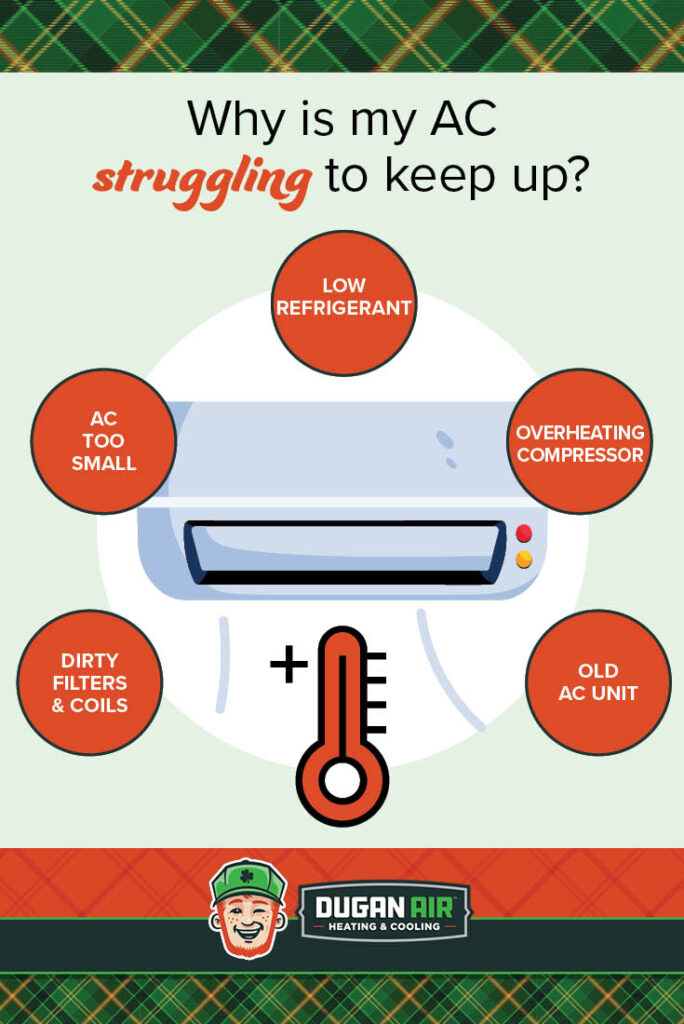
Infographic highlights common air conditioner problems: low refrigerant, overheating compressor, old unit, dirty filters & coils, or AC too small. Central image shows an AC with a red thermometer—top reasons for your AC not cooling.

Dirty Filters and Coils

When the filters and coils inside your air conditioner are coated with dust and grime, it affects the AC airflow, stopping it from removing heat and humidity from the air in your home. 

You can try changing the filter, but if the problems persist, schedule a maintenance call for a thorough cleaning and tune-up. The HVAC technicians at Dugan will also check over the entire system, making sure all parts are working as they should. 

Filters should be changed every three months on average, and coils should be professionally cleaned at least once per year.  If further repairs are needed, our techs will give you a full rundown, along with a price quote and their expert recommendations. 

Your AC Might Be Too Small for the Space

If your AC unit can’t keep up with cooling your home, it might be too small for your home. Some common signs an air conditioner is the wrong size include:

  • Running continuously
  • Short cycling 
  • Uneven temperatures
  • High energy bills
  • Frequent breakdowns
  • Inadequate cooling

If you’re ready for an AC upgrade or believe your air conditioner might be too small for the space it’s in, speak to our Comfort Advisor. We’ll provide an in-home assessment and let you know what we can do to fix the issue. If you end up needing a bigger AC, our team will help you find the right type of traditional air conditioner or ductless mini-split system for premium home comfort.

Low Refrigerant Levels

If your air conditioner has low refrigerant, it reduces its cooling capacity because the refrigerant is the substance that absorbs heat from the surrounding air. This heat transfer moves the warmth outside, cooling the air in your home. 

When refrigerant is low, your air conditioner has to work harder to absorb heat, resulting in longer running times, lower efficiency, and overall reduced performance. This could also make the compressor overheat, damaging the unit. 

Your air conditioner coils are made to be a closed system, so if your refrigerant levels drop, this means there’s a leak, because of problems like:

  • Wear and tear
  • Vibrations loosening components
  • Corrosion
  • Improper installation
  • Factory defects

If you hear a hissing sound, smell exhaust, see refrigerant leaking or pooling around the AC, or notice frozen coils or increased humidity in your home, don’t attempt to fix the problem yourself. Turn your air conditioner off, keep children and pets away, and call an HVAC expert for help, as refrigerants are hazardous to your health and safety.  

Overheating Compressor

If your air conditioner is too dirty, has electrical issues, a faulty fan or low refrigerant, or otherwise has bad ventilation, the compressor will eventually overheat, triggering a safety mechanism that shuts it down to prevent damage. 

The air conditioner will turn off and stop cooling the room when this happens, and may begin short cycling, turning on and off rapidly, as it tries repeatedly to cool the room then overheats again.

A short cycling air conditioner will eventually undergo a full system failure, because it’s working too hard for too long. If you’ve noticed your AC isn’t adequately cooling your home, the compressor may be the issue. Contact Dugan for an HVAC service call and we’ll clean out the AC, and fix the underlying cause of the problem so it doesn’t happen again.

Your AC Is Just Too Old to Handle the Heat

Depending on the type of system you have, your air conditioner’s lifespan ranges from 10 to 15 years. An older air conditioner will have more wear and tear, with reduced efficiency that causes it to work harder and use more energy to cool your home. If your air conditioner is over a decade old and starting to struggle, it will likely be less expensive in the long term to replace the system rather than continually repairing it. 

Another reason AC replacement is a good idea for older models is the impact of new refrigerant regulations, introduced in 2025. Certain older refrigerant types are being phased out of use due to their effects on the environment. As time goes on it’ll be more difficult to find refrigerant and parts for older systems. Upgrading will not only be better for the environment, but will also make repairs and service cheaper and faster. 

What to Do When Your Central AC Can’t Keep Up With Heat

There are some DIY solutions you can try when your air conditioner’s not cooling enough. These include:

  • Changing or cleaning the filter
  • Adjusting the thermostat settings
  • Use ceiling fans and close the blinds

At Dugan, our technicians are professional troubleshooters. We know how to find the common reasons your AC blows warm air, fixing the underlying issues so the problem is solved for good. 

In some cases, you may also want to consider replacing your AC. We’ll provide you with all your options after a comprehensive assessment, giving you our recommendations without pushing unnecessary or expensive services. You’ll have all the information you need to make an informed decision, without any pressure to schedule service or make a purchase right away.

How to Prevent AC Problems in Extreme Heat

The best way to prevent air conditioner problems before they happen is to schedule routine maintenance at least once a year. At Dugan, we provide tune-ups and service calls year-round, so you can keep your system in top shape. 

Joining our Premium Clover Club maintenance program will give you true home comfort and peace of mind, offering discounts, priority service, waived overtime and service call fees, and more. Call any time to learn more about the Clover Club, or to book your next air conditioner tune up. 

Contact Dugan Air Today for HVAC Service

Whether you need help resolving a musty smell coming from your air conditioner or you think you need a full AC upgrade, Dugan Air Heating & Cooling can help. Our team approaches every job with a no-nonsense, straightforward attitude, getting the job done right the first time. 

Call us today or use our online appointment scheduling system to book in. We’re your local HVAC service experts, and we strive to deliver exceptional whole-home comfort to our Hoosier State community.

Year-Round HVAC Maintenance

Why We Offer Maintenance Year-Round at Dugan Air

HVAC maintenance is one of the most important steps you can take to keep your heating and cooling systems running at their best. By routinely tuning up your air conditioner, heat pump, or furnace, you protect it from damage, extend its lifespan, and ensure your home stays comfortable no matter the weather. While many people believe that only seasonal HVAC tune-ups are necessary, we’re here to explain why it’s a good idea to maintain your HVAC system year-round. 

Benefits of Year-Round HVAC Maintenance

At Dugan Air, we offer year-round HVAC care. While many companies will tell you that you only need to service your air conditioner in spring and your furnace in fall, the truth is, it’s never a bad time to get a tune-up for these essential systems. While it makes sense to want to service your appliances before the season that you’ll be using them, there’s no reason that you can’t do the same thing a few months earlier in the year.

Think of it like your car — you wouldn’t only get it tuned up once or twice a year. You take it in for periodic inspections, maintenance, and repairs when you notice a problem. By treating your HVAC system with this kind of consistent attention throughout the year, you’ll have the confidence of knowing your system is ready for use any time, not just in the peak season.

Another consideration is HVAC systems that see year-round use, such as indoor air conditioners and heat pumps. Since these units are used most or all of the year, it makes sense to maintain them on your own schedule rather than only in specific seasons.

Improving HVAC Efficiency with Regular Upkeep

One of the most important benefits of regular HVAC maintenance is improved energy efficiency. Our cooling and heating systems draw a significant amount of power, and regular maintenance helps to minimize this consumption as much as possible. Furnace and air conditioner efficiency is greatly affected by system maintenance — even something as simple as a clogged air filter can dramatically reduce efficiency and increase your energy costs.

By investing in regular maintenance for your home’s heating and cooling systems, you will improve HVAC efficiency, save money on each utility bill, and extend the lifespan of your systems.

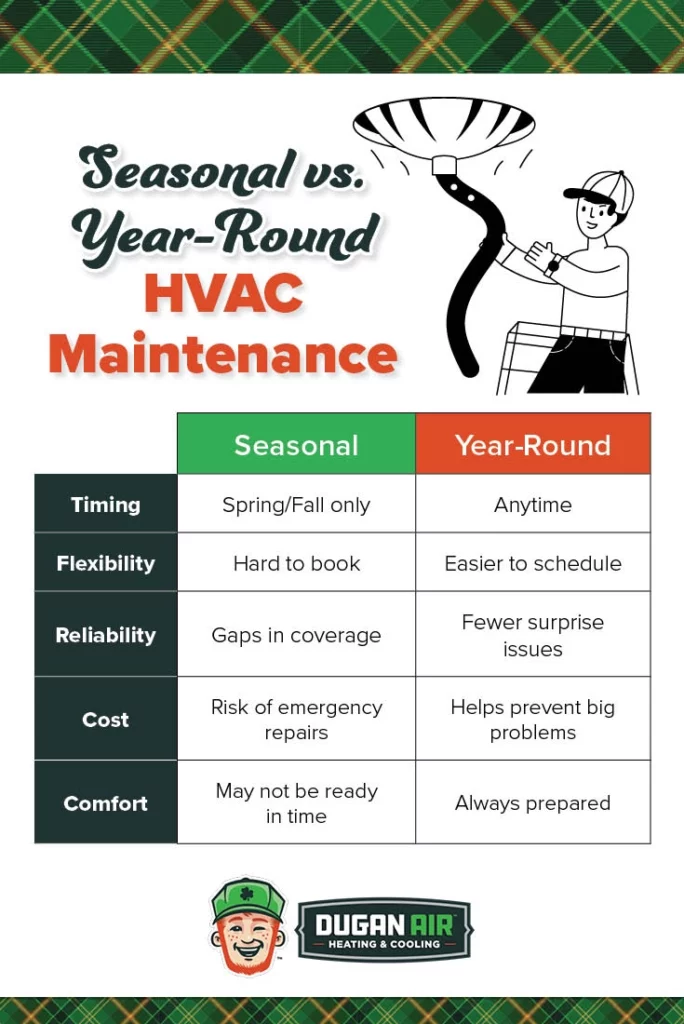
Seasonal vs. Year-Round HVAC Maintenance

Many companies will tell you to maintain your AC before summer or tune up your furnace before winter. While this isn’t a bad idea, it poses a few problems for homeowners. 

There’s no guarantee that issues with your HVAC systems won’t occur in other parts of the year. If an unseasonably warm spring day comes along before your seasonal AC tune-up, you may find your unit isn’t working well (or at all), leaving you in discomfort. 

Another benefit of year-round HVAC care is scheduling flexibility. The classic seasonal tune-up periods of fall and spring are the busiest times of year for HVAC companies, making it harder to secure service appointments at convenient times. You can get the flexible service you need by scheduling during off-peak seasons.

Why Consider Our Clover Club Plan

A Dugan Air hvac technician walking to replace an hvac system

In a perfect world, we could trust that our HVAC systems are always in perfect working order, ready to heat or cool our homes whenever we need them. Fortunately, this can be a reality when you join Dugan Air’s maintenance plan. Our Clover Club premium maintenance program lets you enjoy true home comfort year-round, thanks to our emphasis on proactive, year-round HVAC maintenance.

With special discounts, priority service, waived overtime and service call fees, and countless other benefits, the Clover Club is the best way to ensure your HVAC systems’ peak operation and efficiency, regardless of the time of year. 

Dugan Air: HVAC Service You Can Count On

For more than 14 years, Dugan Air has been providing exceptional work, outstanding customer relations, and trustworthy service and pricing to the Johnson County, IN, area. With hundreds of glowing reviews from satisfied customers, a reputation for fast, quality work, and a team of skilled, experienced, fully licensed HVAC professionals, we’re here to support virtually any home heating or cooling project. If you have questions about the benefits of year-round HVAC maintenance or are ready to get peace of mind with a professional HVAC tune-up, don’t hesitate to contact us today.

Why Is My AC Blowing Warm Air?

Why Is My AC Blowing Warm Air? Common Issues and Solutions

With Indiana summer temperatures regularly reaching 83°F, a reliable air conditioner is a must-have for your home. However, problems like low refrigerant levels can sometimes cause your AC to blow warm air, making your home feel even hotter.

Explore some common causes of an AC blowing warm air, DIY troubleshooting tips, and when to call the team at Dugan Air Heating & Cooling for professional AC repair services.

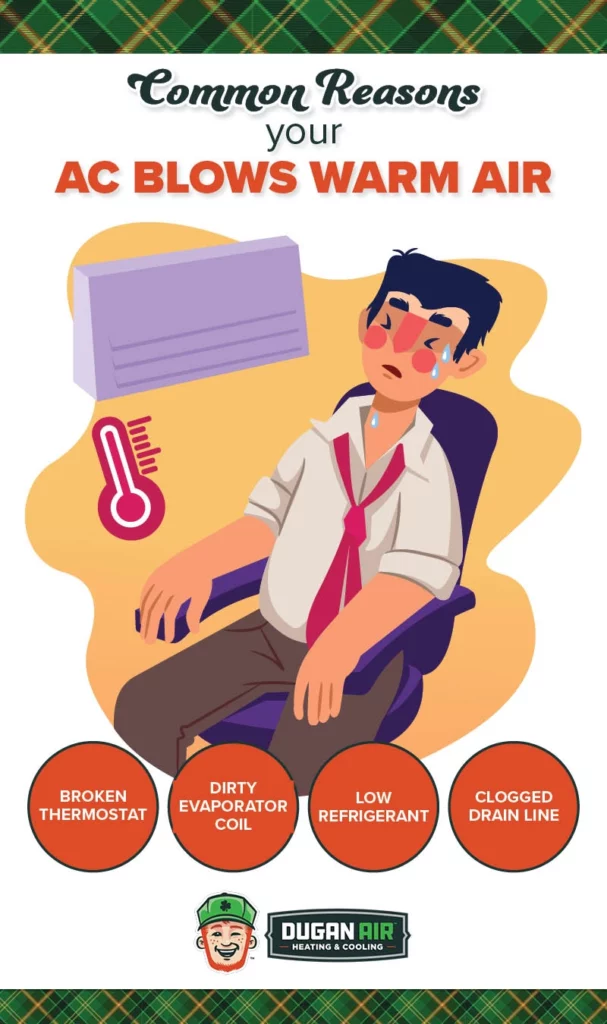
Common Reasons Your AC Blows Warm Air

The following air conditioner problems are among the most common causes of an AC blowing warm air.

Broken thermostat

Thermostat failure is a common cause of HVAC systems blowing the wrong temperature. Make sure your thermostat is set to the correct temperature and has fresh batteries (if it’s battery-operated). Also, check thermostat placement — a sensor directly in front of a fan or vent can cause a temperature misreading, which may trigger your AC to blow warm air.

Dirty evaporator coil

When your evaporator coil gets dirty, it’s difficult for your AC to work properly. The most common cause of a dirty evaporator coil is dirty air filters. Change your AC filters at least every three months, or as directed by the manufacturer. Regularly cleaning and changing the AC filters helps prevent the buildup of dirt on evaporator coils.

Low refrigerant

Refrigerants allow your air conditioner to cool your home. Refrigerant levels should remain consistent in your AC, but they can drop if there’s a leak somewhere in the system. If the leak is small and gradual, you may not notice until your energy bills start to rise and your AC begins blowing cold air.

AC refrigerant can be hazardous to your health, so call a pro if you suspect a leak.

Clogged drainage line

The drainage line allows condensation to flow out from your AC so it can continue cooling your home. If the line becomes blocked with dirt or debris, ice can accumulate inside the unit, preventing air from flowing smoothly and causing your AC to blow hot air. 

If you’re comfortable with DIY, you can try flushing the drain line yourself with hot water or distilled white vinegar. However, contact a pro if you’re not comfortable with DIY or you’re concerned about damaging the system.

Role of Refrigerant Levels in AC Operation

Refrigerant enables your air conditioner to function as a cooling system. As warm air flows through your AC, the refrigerant absorbs heat from the air. The refrigerant then cycles to the outdoor part of the unit, where it releases the heat it absorbed. 

When your AC is working properly, the amount of refrigerant remains the same as it moves through the system, allowing your air conditioner to deliver consistent cooling power. However, if refrigerant is lost through a leak, it can no longer absorb the same volume of heat from your indoor air. 

Refrigerant quality has evolved significantly over the years, with the introduction of safer and more environmentally friendly refrigerants. Learn more about refrigerant changes in 2025 and the tax credits and rebates available for upgrading your air conditioning system.

Importance of Regular AC Maintenance

Practicing regular AC maintenance keeps your air conditioner in good working condition. Routine checkups help to prolong service life, keep your home cool, and catch issues before they become a safety risk.

Prolongs system life

Most modern AC systems last between 15 to 20 years with proper care. However, without regular maintenance, small breakages can damage other parts of the system, reducing AC lifespan or leading to costly repairs. Routine AC maintenance helps catch wear and tear before it becomes an issue.

Maintains cooling power

Problems like refrigerant leaks impact your system’s ability to cool your home. AC maintenance practices catch small leaks so you can get them fixed promptly and keep your home cool.

Keeps your home safe

Some AC breakdowns pose a risk to your family’s health and safety. Regular AC maintenance helps detect potential refrigerant leaks so they can be fixed before they become an issue.

Schedule routine AC maintenance and furnace tune-ups at least once a year to keep your system running smoothly. Your pro will clean your AC system, look for potential issues, and advise you on HVAC maintenance tips for preventing AC damage.

DIY Troubleshooting for AC Blowing Warm Air

If your AC is running but not cooling your home, try these tips for troubleshooting AC issues.

Check the thermostat

Make sure the thermostat’s power is on, it’s not in the path of any vents, and is set to the correct temperature. You can also try resetting the thermostat if you suspect it’s malfunctioning.

Check the breaker

In most cases, a tripped breaker will shut off your entire air conditioning unit, but sometimes the indoor and outdoor components have different systems. Ensure the power is on to all components, and check both units for power if you’ve recently experienced a power surge or outage.

Clear the vents

Check that any intake and outtake vents are clear and unobstructed. When inspecting the outdoor unit, look for debris that may have blown into the system and blocked airflow.

Change the filters

Check your AC filters to make sure they’re clean. If it’s been more than three months since you’ve changed the filters, consider changing them now. Clean air filters help your air conditioner run efficiently.

When To Call a Professional HVAC Technician

If you’re dealing with any of the following situations, it may be time to call for professional AC repair:

You suspect a refrigerant leak

If you think your AC may be leaking refrigerant, it’s best to call a professional as soon as possible. In addition to blowing warm air, a leaking AC may make a hissing noise, develop ice buildup around the evaporator coils, emit a sweet or chemical smell, or increase your electricity bill. Refrigerant leaks are a health hazard, so consult a professional technician if you notice any of these signs.

Your AC needs internal cleaning

While some drain line and outdoor cleaning can be managed with some DIY experience, it’s best to avoid cleaning internal components yourself. Generally, if you need to unscrew something to access a part, wait and call a pro. This helps avoid damage to your system, voiding your warranty, and safety risks associated with AC repair. 

You can’t identify the issue

An AC blowing warm air can be caused by a variety of issues, many of which aren’t immediately obvious. If you’ve tried basic troubleshooting steps, such as checking the thermostat and changing the filters, contact a professional to diagnose and fix the issue.

Stay Cool With Dugan Air’s AC Services

If your AC is blowing warm air, you don’t need to sweat it out — choose Dugan Air for top-notch HVAC services with a no-shenanigans approach and a touch of Irish charm. From refrigerant leaks to dirty condenser coils, our technicians are prepared with the expert tools and knowledge to solve the problem. Contact us today for reliable, expert solutions to your AC issues and get your home back to feeling cool again.

Why Is My AC Running Nonstop?

Why Is My AC Running Nonstop?

There’s nothing quite like walking into a cool, air-conditioned home on a hot Indiana summer day. However, if you’re wondering why your AC is running nonstop, you’re not alone. Many homeowners face this issue, especially during the peak summer months. A constantly running AC can lead to skyrocketing energy bills and may indicate underlying issues with your HVAC system. 

air conditioner repair

Explore some common causes, potential consequences, and quick solutions for constant AC operation issues from the team at Dugan Air Heating & Cooling.

Common Causes for an AC Running Nonstop

Several factors can cause an air conditioner to continuously run. Understanding the root cause is the first step in effectively addressing constant AC operation issues. Usually, it’s due to one or a combination of these scenarios:

  • Incorrect thermostat settings: If the temperature is set too low, especially during hot weather, your system may run continuously in an attempt to reach the set temperature.
  • Dirty or clogged air filters: Air filters clogged with dust and debris restrict airflow, forcing the air conditioner to work harder and potentially causing it to run longer than necessary. Check your AC filter monthly during high-use seasons. 
  • Refrigerant issues: Low refrigerant levels or refrigerant leaks can prevent the air conditioner from cooling the air effectively. This can cause the system to run constantly.
  • Undersized AC unit: An AC unit that’s too small for your home will have to run continuously just to maintain a comfortable indoor temperature. 
  • Dirty coils: Dirty evaporator and condenser coils reduce the system’s ability to absorb and release heat, which can cause the unit to run nonstop.
  • Leaky ducts: If the air ducts are leaking, a significant amount of cooled air can escape, causing the thermostat to detect warmer temperatures and signal the AC to keep running.
  • Faulty thermostat: Sometimes, the thermostat might be malfunctioning and continuously signaling the AC to run.
  • Poor insulation: Drafty windows or gaps around doors can force your system to work overtime. Sealing air leaks, upgrading weather stripping, and adding insulation can improve your home’s energy efficiency.

Potential Consequences of a Constantly Running AC


Quick Solutions for a Nonstop Running AC

Not every air conditioner problem requires the help of an HVAC technician. These troubleshooting tips can often fix an AC running continuously without the need for professional intervention, saving you both time and money:

  • Check the thermostat: Ensure your thermostat is set to “AUTO” instead of “ON.” If it’s set to “ON,” the fan runs continuously, regardless of whether the system is actively cooling.
  • Install a programmable thermostat: If your current thermostat is outdated, upgrading to a programmable or smart thermostat can help optimize cooling cycles. 
  • Replace or clean the air filter: A dirty filter can significantly reduce your AC’s efficiency. Replace the filter every one to three months.
  • Inspect the outdoor unit: Clear any leaves, grass, or dirt blocking the outdoor unit. Obstructions can limit ventilation and cause the system to overwork.
  • Check the vents: Blocked vents can disrupt airflow, causing your system to work harder than necessary.
  • Seal leaky ducts: Use foil tape to seal visible gaps. For a more permanent fix, consider having the ductwork professionally inspected and sealed.

Even if you fix the immediate issue, routine AC maintenance is key to preventing future problems. Proactive DIY inspections and annual HVAC tune-ups can catch minor inefficiencies early, preventing long-term damage, saving you money on repairs, and helping your air conditioner run efficiently throughout the seasons.

When To Call a Professional

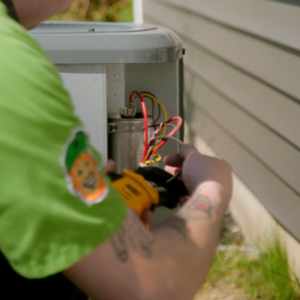
technician fixing air conditioner outside

Knowing when to call for AC repair can prevent small problems from becoming major issues and complete breakdowns. Here are some signs it’s time to contact an HVAC professional for an air conditioning repair:

  • DIY fixes aren’t working: If you’ve changed the air filter, checked the thermostat settings, and inspected visible components, and the air conditioner still won’t stop running, it’s time to contact a professional.
  • Strange noises and odors: Unusual sounds or musty/burning smells could indicate electrical issues, mold, or failing mechanical parts that require professional attention.
  • Inconsistent cooling: If certain rooms are cold while others remain warm, or if the air conditioner never seems to cool the house properly, a technician should assess the issue.
  • Rising energy bills without increased usage: A sudden spike in your utility bills is a sign your system is working inefficiently and may need a professional diagnosis.
  • System is more than 10 to 15 years old: If your system is older and experiencing frequent issues, a full system evaluation can determine whether a full AC replacement would be more cost-effective in the long run.

Contact Dugan Air Heating & Cooling If Your AC Is Running Nonstop

Dugan Air Heating & Cooling provides top-quality heating and cooling services with a unique blend of premium service and a fun, no-shenanigans approach. Backed by our friendly leprechaun mascot, Dugan, we deliver exceptional comfort to your home while creating a memorable customer experience. We aim to be the go-to choice for homeowners seeking both comfort and a personal connection.

Contact us today for a professional AC assessment and experience the Dugan Difference. We provide golden service with a touch of Irish charm and a strong commitment to our local community.

Why Does My AC Smell Musty?

Why Does My AC Smell Musty? Causes & How to Fix It

Indiana gets a fair amount of snow, but summers are when homeowners see the most precipitation. With summer rain and heat comes humidity, which means your AC might start to smell musty.

The experts at Dugan Air Heating & Cooling have some helpful tips and information if your AC smells musty, so you can enjoy a clean-smelling, healthy home before the summer hits. Discover some common causes of musty smells, how to eliminate musty AC unit odor, and more.

Common Causes of a Musty Smell in an AC

The musty smell from your AC unit may be caused by a variety of issues. Here are some of the most common causes of a musty odor.

Mold and mildew

An accumulation of moisture creates the perfect breeding ground for mold and mildew to grow and thrive. AC units remove moisture from the air, which can start to accumulate in your drain pan, air ducts, or evaporator coils.

If your air conditioner isn’t properly maintained or cleaned regularly, mold and mildew can start to grow, creating an unmistakable musty smell. Mold in your AC is a health hazard that requires prompt attention.

Dirty filters

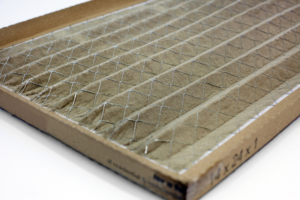
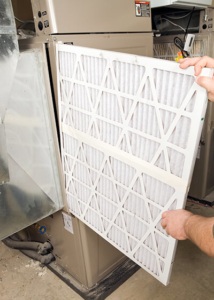
dirty_filter

The air filter in yourHVAC system is designed to trap particles like dust, pollen, and pet dander. However, a clogged or dirty filter can cause moisture buildup, leading to musty smells. A clogged air filter also restricts airflow, which affects your air conditioner’s efficiency and increases your energy costs. Over time, dirty filters can lead to a stressful system breakdown.

Other common causes

Moisture and mold/mildew are the most common causes of a musty smell in an AC, but inadequate ventilation can also contribute to the unpleasant odor. Constant temperature fluctuations may lead to excess condensation and mold growth. If your blower wheel is dirty, grime will build up, creating a musty smell. A dead rodent or other pest stuck in your ductwork or HVAC system will cause a musty odor. 

Steps To Eliminate Musty Odors From Your AC

How do you get rid of an AC smell? Follow these steps to help eliminate unpleasant odors from your air conditioner and home: 

  • Step one: Clean or replace the air filter to increase airflow and prevent moisture and bacteria buildup.
  • Step two: Clean your evaporator coils by removing dirt and debris with a mixture of warm water, mild detergent, and a soft cloth or soft-bristled brush.
  • Step three: Inspect your drain pan and drain line for clogs, and empty the drain pan if it’s full of water.
  • Step four: Make sure your air vents are clear of obstructions and remove furniture or other objects blocking them to improve airflow.
  • Step five: Seal leaky ducts and repair cracked or broken ductwork to fight moisture buildup and musty odors.
  • Step six: Contact the pros at Dugan Air to schedule professional duct cleaning to remove dirt and persistent musty odors. 
  • Step seven: Use a mixture of vinegar and water to deodorize your AC unit and place an open container of baking soda nearby to absorb excess odors.
  • Step eight: Use a dehumidifier in your home if the humidity levels are too high and are contributing to a musty smell.
  • Step nine: Run your fan on low for a while to dry out your system after cleaning.

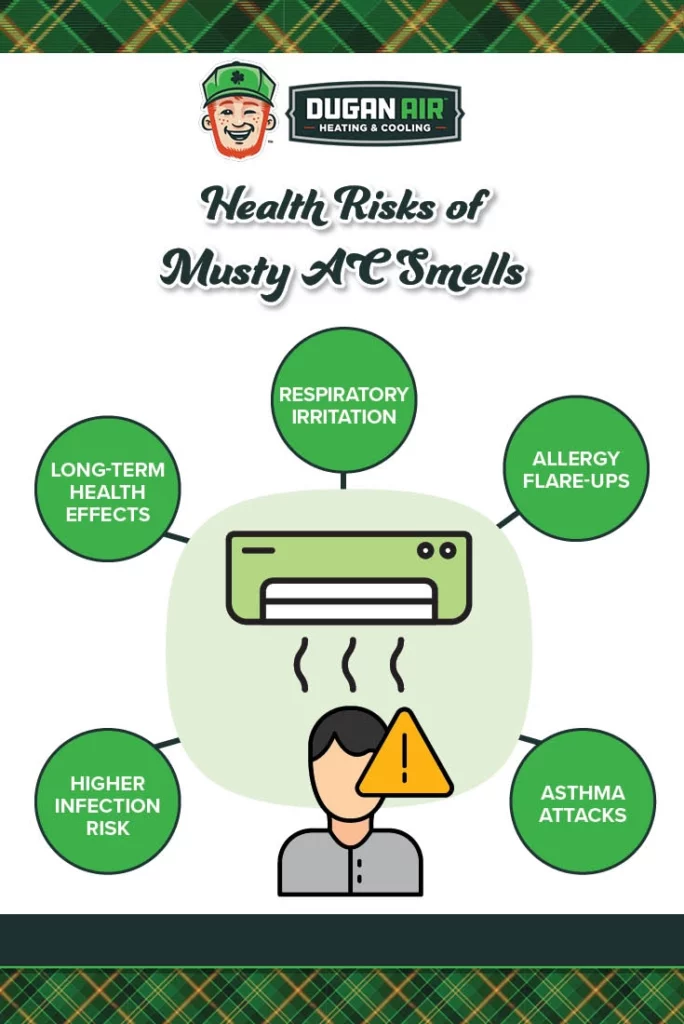
Health Risks Associated With Musty AC Smells

Preventing Musty Odors in Your AC

One of the best ways to avoid dealing with musty odors is to prevent them from occurring in the first place. Follow these tips to help prevent musty odors in your AC.

furnace filter maintenance

Practice regular maintenance

Routine maintenance — including changing your HVAC air filter every 30, 60, or 90 days — is a good way to prevent moisture buildup and musty odors. Have your system and air ducts inspected and cleaned every season to remove dirt and buildup. Clean your evaporator coil regularly to remove excess grime, and keep your condensate drain line clear and free from clogs. Doing this prevents water from pooling, which contributes to mold growth.

Address moisture issues

If you have a high humidity level in your home, use a dehumidifier to keep it to a minimum and prevent mold and mildew growth. Make sure your home has proper ventilation, especially in the kitchen and bathrooms, to keep moisture levels low. If your air ducts are leaking, have them sealed and repaired to stop moisture buildup and unpleasant musty odors. 

Use tools to remove odors

Several products help to keep the air inside your home fresh and clean, including air purifiers that use activated carbon filters to remove contaminants and odors. Place baking soda in a bowl near your AC unit to absorb moisture and odors. Clean your air vent slats regularly to remove debris and dust, which may contribute to musty smells.

Contact Dugan Air for a professional AC odor removal service, such as a special UV light installation that helps kill mold and mildew spores. 

When To Contact a Professional

Dugan technician performing maintenance

While the above tips are helpful for preventing and removing musty AC smells, there may come a time when it’s best to contact a professional. Consider calling Dugan Air for help with your musty AC odor issues when you notice the following:

  • The odor won’t go away: If the musty smell remains long after you’ve tried our troubleshooting tips, you might have a more serious underlying problem that requires professional help.
  • Visible signs of mold: If you can see mold growing in or around your AC unit or air vents, you have a mold problem that requires professional removal and remediation.
  • Low airflow: Weak or no airflow after changing the filter may indicate a more complex issue that requires help from a trained HVAC professional. 
  • Strange noises: Unusual sounds, such as rattling, hissing, or groaning, accompanied by a musty smell, may indicate a problem with the AC system components.
  • Health issues: If you or someone in your family experiences ongoing mold-related health issues, have the problem addressed as soon as possible to keep everyone healthy.

Contact Dugan Air for AC Services

The team at Dugan Air Heating & Cooling blends high standards of service with a friendly, community-centered approach. We aim to be the go-to choice for Indiana homeowners seeking both comfort and a personal connection. Contact us today if you need help addressing musty AC smells or want to schedule an HVAC service.

cracked heat exchanger symptoms

Symptoms of Cracked Heat Exchanger on Your Furnace

One of the most common furnace issues Indiana homeowners face is a cracked heat exchanger. Fortunately, your furnace will likely show signs to indicate you’re dealing with this problem so you can take action. The team at Dugan Air Heating and Cooling is highly skilled at performing all types of furnace repairs in Franklin, including addressing cracked heat exchangers and more.

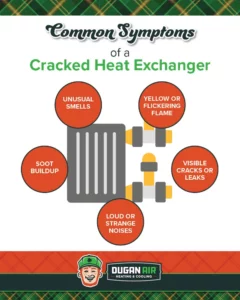
dugan air_Symptoms of Cracked Heat Exchanger on Your Furnace

Common Symptoms of a Cracked Heat Exchanger

Here are some common signs and symptoms that may indicate a possible crack in your heat exchanger.

Unusual smells

A chemical or dusty smell or a burnt odor could mean you have a cracked furnace heat exchanger. If you’ve recently replaced your air filter and still notice these odors, your furnace needs immediate professional attention to address a possible carbon monoxide leak. In most cases, homeowners notice these odors as soon as they turn the furnace on. 

If you notice an unusual smell or a burning odor coming from your furnace, turn it off immediately and turn off the gas supply going to the furnace. Open your doors and windows to ventilate your home. Contact your local gas company to notify them of the odors, then call Dugan Air for a professional inspection and repair. 

Soot buildup around the furnace

Visible soot buildup around your furnace may mean the heat exchanger is cracked. Soot appears when the cracked component disrupts the combustion process and causes it to burn fuel incompletely. Combustion gases can escape before the heat is fully transferred, leading to soot formation. Look for a fine, black, powdery substance around your furnace if you suspect this is the issue. 

The furnace flame turns yellow instead of blue

The pilot light in your furnace should always have a steady, blue flame. A flickering or yellow (or orange) flame is one of the most common cracked heat exchanger symptoms. When the heat exchanger is cracked, air mixes with fuel and causes improper burning. Never ignore a yellow pilot flame — call Dugan Air right away.

Strange or loud furnace noises

Some furnace noises are normal, but new or unusually loud sounds may indicate an issue with your heat exchanger or another component. Common noises associated with a cracked heat exchanger in your furnace include popping, whistling, banging, or scraping sounds from the furnace cabinet. These noises may occur when the metal expands and contracts due to temperature changes or if the crack is large enough to cause a sudden change in pressure. 

Visible cracks on the heat exchanger

A visible crack is the most obvious sign of an issue with your heat exchanger. Examine the component closely for any cracks or splits. Visible cracks are commonly accompanied by strong chemical or gas-like odors, whistling sounds, or a flickering, yellow pilot light flame. Water leaking from your furnace may also be a sign of a cracked heat exchanger.

What To Do if You Suspect a Cracked Heat Exchanger

A cracked heat exchanger poses a serious safety risk due to the potential of a dangerous carbon monoxide (CO) leak. This odorless, colorless gas can cause a range of serious health issues and can even cause death. A cracked heat exchanger can also reduce the efficiency of your furnace, raise energy costs, and lead to uneven heating or a complete malfunction of the system. 

If you notice any of the above signs or suspect a cracked heat exchanger, follow these steps: 

  • Step one: If possible, turn off your furnace and the gas supply going to your home, then open the doors and windows to increase ventilation.
  • Step two: Leave your home and call your local gas company immediately if you suspect a gas leak.
  • Step three: Contact an experienced HVAC company for an emergency furnace inspection.
  • Step four: If the HVAC technician confirms you have a cracked heat exchanger, discuss whether you need a repair or replacement.
  • Step five: Install carbon monoxide detectors throughout your home to alert you of a possible gas leak. 
  • Step six: Enroll in a regular preventative maintenance plan to help your furnace operate safely and optimally for years to come. 

Contact Dugan Air for Premium Service

Knowing the signs of a cracked heat exchanger keeps you safe and preserves the functionality of your furnace. If left ignored, a cracked heat exchanger poses a threat to your furnace and your health.

The NATE-certified technicians at Dugan Air provide top-notch furnace inspections, repairs, and replacements with a touch of Irish charm. Contact us to schedule an appointment and experience the Dugan Difference today!

Frequently Asked Questions

What causes a heat exchanger to crack?

Overheating due to dirty air filters or ductwork, worn control valves, and prolonged wear and tear due to expansion and contraction are the most common causes of a cracked heat exchanger.

Can a cracked heat exchanger be repaired?

In some cases, a cracked heat exchanger can be repaired by welding the cracks. However, older furnaces may need to have the heat exchanger or the entire unit replaced if the damage is too extensive. 

How can I prevent a cracked heat exchanger?

The best way to prevent a cracked heat exchanger is to schedule regular furnace maintenance, including professional inspections and tune-ups. Visually check your furnace to look for damage, and keep air filters and ductwork clean and free of obstructions to encourage proper airflow and prevent overheating. 

Signs you need a new furnace

How Do You Know When Your Furnace Needs to Be Replaced?

It can be hard to know exactly when to replace a furnace. Due to the expense, you may want to stretch out your failing furnace’s life for one more year. However, if your furnace is no longer doing its job by heating your house properly, it may be time to consider an upgrade. 

At Dugan Air Heating & Cooling, our HVAC experts will help you decide when to call it quits with your current furnace without upselling you on extras or pushing the most expensive new model. Our goal is to create a comfortable home climate for you. 

Telltale Signs You Need a New Furnace

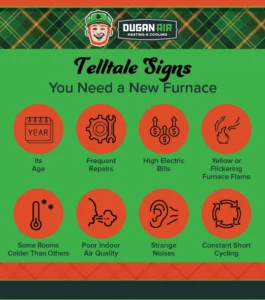
Signs you need a new furnace

Some of the top signs you need a new furnace include: 

Its age

While the typical furnace lifespan depends on the type, size, how much it’s used, and how often it’s serviced, a furnace loses efficiency and starts breaking down after 10 to 15 years. If your furnace is getting older, it might be time for an upgrade.

Frequent repairs

There comes a time when the cost and inconvenience of frequent repairs get to be too much. If you need to have your heating system serviced more than once a year and it’s getting too overwhelming or expensive, a new furnace might be the answer.

High electric bills

A failing furnace uses more electricity to heat your home, which shows up on your electric bills. If you see a big uptick in electrical costs when it’s cold outside, a new furnace will help.

Yellow or flickering furnace flame

A yellow or flickering pilot light indicates that the furnace isn’t mixing oxygen and gas correctly. This dangerous problem could mean excess gas is leaking into your home. At Dugan Air, we’ll install your new furnace safely and properly and do a full safety inspection so you don’t have to worry.

Some rooms are colder than others

An ailing furnace will struggle to heat your home evenly. If some rooms are always cold, even when the furnace is blasting, you may want to consider replacing the old model. We can help you find the right size furnace to suit your home’s unique needs. 

Poor indoor air quality

Depending on the problem, a furnace on its last legs will force dust and allergens into the air, or worse, it could release harmful toxins and gas. If you or your family members start noticing chest congestion, coughing, sneezing, dry nose and throat, headaches, or allergy symptoms, it’s a good idea to check your furnace and possibly replace it. 

Strange noises

One of the most common signs of a malfunctioning furnace is strange sounds, like banging, grinding, or knocking. This could indicate anything from mechanical issues to a clogged air filter. In some cases, it’s a simple fix, but unusual noises could also indicate impending disaster. Your local HVAC technician can guide you in your options. 

Constant short cycling

Short cycling, or turning on and off quickly, is a sure sign of a problem with your gas or electric furnace. There could be easy-to-fix issues like loose electrical connections or a dirty air filter, or it might indicate failing sensors and mechanical parts. Constant short cycling may mean your issue isn’t easily fixable. Schedule an inspection with Dugan Air to find out what your furnace’s short cycling means.

Factors to Consider When Replacing a Furnace

Now that you know how to tell if you need a new furnace, you may wonder how to choose a new one that’s right for your needs. When it comes to furnace replacement, here are the most important factors to consider.

The size

The size is one of the most important considerations when buying a new furnace. You need a furnace big enough to heat all the rooms in your home consistently without overworking but not so big that you’re wasting energy and causing short cycling when you run it.

Generally, a furnace should produce around 30 to 60 BTUs per square foot, but this is a guideline and not a hard and fast rule. Consider the home’s layout, insulation, and other factors when choosing a furnace size. If you’re not ready to do the math yourself, don’t worry — an expert at Dugan Air will help. 

Energy efficiency

The more energy-efficient your new furnace is, the less money you’ll have to spend per month on heating your home, which equals big savings in the long run.

Another benefit of a new and more energy-efficient model is that they often qualify for rebates and tax credits. You can feel confident knowing your system is designed with efficiency and innovation in mind. They also last longer than older models thanks to updated technology, and they need less maintenance overall because they’re better sealed and more user-friendly. 

Programmable thermostat

A programmable thermostat gives you the ultimate control over your home’s interior climate. You can set it to your desired temperature and program it to turn up or down when you’re away. Some smart thermostats remember your preferences to better enhance your home comfort. 

New furnaces may even offer voice controls, energy-tracking features, and geofencing technology that knows when you’re home and when you’re away, automatically adjusting the temperature to your preferences. If you want total control over your thermostat, you’ll love the new available furnace features.

The price

You’ll need to consider your budget when you purchase a major home appliance like a furnace. For many, price is a big factor. At Dugan Air, we understand that most families aren’t able to drop a large amount on a top-dollar model, which is why we offer financing options to help. This way, you can get the furnace you want in your home without sacrificing your savings. 

Extra features

Some top-of-the-line furnaces have additional features you can incorporate into your home, but they often cost extra. Are you looking for a basic model that turns on and off, or do you want your furnace to provide HEPA-quality air filtering capabilities or integrate into your smart home system? Our experts can help you decide.

Call Dugan Air For Your Furnace Needs

Ready to look at new furnaces? Need someone to check out that strange noise? Want to schedule your routine annual maintenance? We’re available now by phone or via our online contact form.

We’re passionate about helping our local community and work hard to ensure your home in Greenwood, Columbus, Franklin, and the surrounding area is warm and comfortable, even when temperatures fall below 32°F. Contact us today to experience the Dugan Difference! 

Frequently Asked Questions

How much does a new furnace cost?

The cost depends on the type, size, and features. The cost of a new furnace can range from $10,000 and up. 

How long does a furnace installation take?

The installation time depends on the complexity of the job. We’ll try to be in and out of your house in a day, but we’ll give you a more accurate time estimate after seeing your home and determining the amount of work involved. 

How often should a furnace be serviced?

We recommend servicing your furnace at least once a year before the winter chill blows in. 

What are the new HVAC Refrigerant regulations?

New regulations require the use of updated refrigerants that meet current industry standards, phasing out hydrofluorocarbons (HFCs) as part of the transition to modern refrigerant technology. 

New 2025 Refrigerant Changes

New 2025 Refrigerant Changes Indiana Homeowners Should Know

In 2025, refrigerant updates may impact homeowners with air conditioners. New regulations from the Environmental Protection Agency (EPA) will phase out older types of refrigerants (the cooling gas inside your air conditioner) due to their reported effects on the environment. This transition is known as the R410A phase-out.

If you have any questions about how this program will affect your air conditioner, you can call Dugan Air Heating & Cooling. We’re your local, trustworthy source for information about your HVAC system, and we can help you decide how to handle these changes, depending on the type of AC you have in your home and how old it is. 

Our experienced HVAC technicians are equipped to replace your older AC with a new, more efficient, and environmentally friendly model. We can also continue to repair and maintain your current air conditioner. Read on to learn more about what changes will occur, and how they will affect you in the near future. 

What is the New Refrigerant?

The new refrigerants in 2025 are known as A2L refrigerants. These are already used in small appliances and have been in use as HVAC refrigerants in other countries for years. 

Older refrigerants, such as R410A, are being phased out due to updates in environmental standards. These changes prioritize the use of newer refrigerants with improved efficiency and reduced environmental impact. While R410A has been a reliable option for many years, the industry is transitioning to alternatives that align with the latest regulations for refrigerant technology.  

What Will Replace R-410A in 2025?

The most commonly used A2Ls are R0454B and R-32. These are modern refrigerant options designed to meet updated efficiency and regulatory standards.

The A2L refrigerant classification indicates that these chemicals are designed to meet updated industry standards, offering low toxicity and mild flammability comparable to common household products. 

How to Prepare for the New 2025 Refrigerant Changes

If this is the first you’re hearing about the upcoming refrigerant changes, don’t panic. Your air conditioner will still be fine in January, and nothing is suddenly going to change. That said, you’ll want to seriously consider the future of your HVAC system moving forward. 

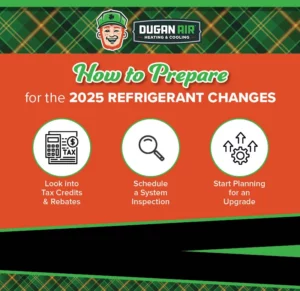
How to prepare for 2025 HVAC refrigerant changes

Some things you can do now include: 

Look into your local tax credits and local rebates for upgrading your HVAC system

There are federal tax credits available when you upgrade your home cooling system, and in Indiana, there are rebates for qualified homeowners too. Save some money on your system upgrade, while getting ahead of the issue by replacing your AC before repairs become too expensive.

Have your current system inspected now

If you’re not sure what kind of refrigerant your AC uses, you can schedule an inspection with Dugan Air. We’ll come to check out your air conditioner, and let you know whether these upcoming changes affect your home, and what options you have. 

Start thinking about replacing your air conditioner

Eventually, you’ll have to alter your system to accommodate these refrigerant changes. Now’s the time to start planning for this major household upgrade. You can also start looking into the possibility of retrofitting new parts into your existing system, especially if you’ve just replaced your AC and aren’t ready to buy a whole new system again. 

Call Dugan Air to schedule an appointment with an HVAC professional. One of our team members will take a look at your existing system and provide you with reasonable options, so you can make an informed decision when it’s time to make the change. 

How Will the R-410A Phase Out Affect You?

Don’t worry, it won’t be illegal to continue to recharge your air conditioner Freon products. For now, service parts and R-410A refrigerants will still be available. Eventually, you’ll need to change out your air conditioner or retrofit new parts onto your existing system. 

Air conditioner prices and HVAC system replacement costs will also go up about 30%, as manufacturers need to upgrade their factories and make big design changes to accommodate the refrigerant changes. There may also be supply chain issues as these changes take place, so your upgrades and repairs will take longer than usual. 

Because the new refrigerants are classified as being flammable, building codes and safety standards surrounding HVAC systems will also need to be upgraded, which can affect the costs if you’re planning a renovation or building a new home. 

When to Replace Existing HVAC Systems

Upgrading your HVAC system sooner rather than later can help you stay ahead of upcoming changes and avoid potential delays as demand increases. Factors like your budget and the condition of your current system will guide your decision, but planning ahead ensures you’re well-prepared. Addressing the upgrade now may also help you avoid higher repair and parts costs in the future, giving you peace of mind and greater control over your home comfort.

Benefits of Upgrading Your HVAC

While it may be annoying to have to make big changes to your home heating and cooling system, there are some big benefits to upgrading your HVAC including:

Efficiency

A new air conditioner will save you money in the long term, because it runs more efficiently, using less energy. 

Convenience

New AC models are programmable, they can integrate into smart home technology, and they even remember your preferences. You can set your air conditioner to keep you home exactly as you like it, 24 hours a day. 

Forward-thinking choice

Upgrading to a new A2L-using air conditioner means you’re embracing the latest advancements in refrigerant technology, ensuring a more efficient and responsible solution for your home. 

Better safety standards

Because A2Ls have a higher flammability rating than previous refrigerants, there are higher safety standards required in building codes and HVAC system designs, which ultimately benefit you and your family, keeping you safer. 

How Dugan Air Can Help With 2025 Refrigerant Changes

Not only does Dugan Air troubleshoot your AC issues and keep it running efficiently, but we’re also experts in air conditioning installations and replacements. We’ll help you find the right AC for your home at a reasonable cost, and our team will professionally install it for you at your earliest convenience. We offer easy financing options to assist you in getting this big job done now, so you don’t have to worry. Experience the Dugan Difference, with our expert HVAC team on your side. 

Call Dugan Air For All Your AC Needs

Ready to speak to a Dugan Air representative about the 2025 refrigerant changes? Call us today or schedule an appointment for a system inspection. We care about our local community and will do all we can to help get you ready for these big HVAC changes. 

Frequently Asked Questions About the 2025 Refrigerant Transition

What changes next year for air conditioners?

Homeowners with air conditioners that use R-410A refrigerant will eventually need to upgrade to newer models designed to comply with updated industry standards. 

What will replace 410A in 2025?

In 2025, new refrigerants like R-454B and R-32 will replace R-410A. 

What refrigerant is being phased out?

R-410A refrigerant is being phased out in 2025, along with others that do not meet updated industry standards for refrigerant technology.

Schedule Now

"*" indicates required fields

This field is for validation purposes and should be left unchanged.