 (463) 348-8175


Why Does My Furnace Keep Freezing Up?
There can be several reasons why your furnace keeps freezing up in the winter, including clogged air filters, blocked vents, frozen condensate lines, faulty thermostats, broken blower motors, and improper furnace sizing. Many of these issues restrict airflow, which can cause condensation to freeze inside your furnace. We’ll explore each cause of a frozen furnace, as well as troubleshooting measures, preventative tips, and how Dugan Air can help solve your frozen furnace problems.
Can a Furnace Really Freeze Up in Winter?
Wondering whether a furnace can freeze up in winter? The short answer — absolutely. When temperatures drop below 32°F, problems such as airflow and drainage issues can cause water to freeze before it has time to exit the furnace. This leads to blockages inside the furnace, preventing it from heating your home properly.
If you’ve noticed your furnace freezing up, it doesn’t mean it’s broken. It could be a simple issue like a clogged air filter or a mechanical issue that an HVAC professional can fix. Our team at Dugan Air offers emergency HVAC support in the greater Indianapolis area, including Greenwood, Franklin, Mooresville, Columbus, and surrounding areas.
6 Common Causes of a Frozen Furnace
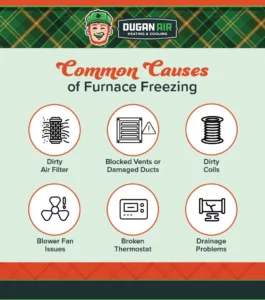
Several issues can cause a frozen furnace, including airflow problems and a faulty thermostat reading. We’ll explore six of the most common causes of a frozen furnace so you can determine what’s getting in the way of a cozy home.
Clogged or dirty air filter restricting airflow
Airflow is essential for your furnace to properly heat your home. When furnace filters become clogged or dirty, it’s harder for air to flow freely, which can lead to condensation building up inside your furnace. In cold weather, this condensation freezes and causes internal furnace problems.
The best way to prevent this is to check your furnace filters once a month and change them every three months (or as recommended by the manufacturer). However, if freezing is already happening, it’s best to call a professional to resolve the problem.
Closed vents or blocked returns
In some cases, the problem lies outside the furnace itself. When dirty, blocked, or damaged air vents impede proper airflow, condensation is forced to remain within the system, potentially leading to ice buildup. This can even mean that a furnace can start to freeze while it’s running.
Luckily, this is a simple fix. Open the vents and keep furniture and other items away from them. If your ducts are collapsed or damaged, you’ll likely need a professional to replace the damaged parts and get your home heating system back up and running.
Blocked or frozen condensate drain line
Your furnace naturally produces moisture when it runs, which exits the system through the condensate drain line. However, when the line becomes dirty or clogged, moisture can get stuck and freeze inside. This may also occur in lines and pipes that aren’t properly insulated for winter.
Faulty thermostat
If your HVAC thermostat incorrectly reads the temperature in your home, the furnace will have difficulty maintaining a temperature above freezing in its internal components. This can lead to ice formation wherever condensate forms.
Furnace tip: If your only problem is a furnace freeze-up, it’s often due to one of these causes. However, if you’re experiencing other furnace problems, such as a faulty pilot light, unusual furnace noises, or an unreliable heat exchanger, there may be a bigger problem. One of our Dugan Air pros can inspect your furnace and provide an expert diagnosis and repair plan.
Blower motor not working properly
The blower motor and fan are also essential parts for proper airflow. Damage or wear on either part can reduce airflow, leading to the formation and freezing of condensation. Since these are internal components, it’s important to call an HVAC technician for professional furnace repair.
Improper furnace sizing
A furnace that’s too small will run overtime trying to heat the space, which speeds up wear and tear and can lead to breakdowns. A furnace that’s too large will short-cycle, which can lead to various problems, including freezing. A qualified HVAC pro can help you determine the right size of furnace for your home.
In some cases, large amounts of ice buildup can cause damage to your furnace. If your furnace starts to freeze up, it’s important to call a pro and address the problem so it doesn’t lead to costly damage. Frozen furnace repair costs vary and will depend on the cause of the freeze-up.
What To Do If Your Furnace Freezes Up
If a frozen furnace has left you stuck in the cold, try these simple steps for what to do if your furnace freezes up:
Step 1: Remove the ice
Using warm water or warm air, remove the ice from the furnace. This may involve flushing the condensate drain line, which you can do yourself if you’re comfortable.
Step 2: Check the thermostat
Confirm that your thermostat is set to the correct temperature and that there are no heaters or other devices nearby that might throw off the reading. If the thermostat is incorrect or broken, it may even prevent the heater from turning on.
Step 3: Check the filters
Check that your furnace filters are clean and not clogged. In general, it’s best to check your filters once a month and change them every three months (or as recommended by the manufacturer).
Step 4: Check the condenser coil
Check that there’s nothing obstructing the condenser coils, such as old leaves, snow, or debris.
Step 5: Examine for leaks
Examine the outside of your furnace and check for any signs of visible damage, leaking water, or condensation. As a general rule, don’t open the internal components — if you have to unscrew anything, it’s best left to the pros.
Step 6: Check vents and ducts
Perform a walkthrough of your home to ensure that there are no obstructions blocking the vents and ducts. This may include rugs, furniture, and other things that can prevent proper airflow.
If your furnace keeps freezing even after you try all of these DIY steps, call Dugan Air for emergency furnace repair. Most furnaces last 15 to 20 years, so if you have an older furnace that keeps freezing, it may also be time to consider furnace replacement.
Prevent Furnace Freeze-Ups Before Winter Hits
The greater Indianapolis area can often drop below freezing as early as mid-October. Prevention is key to keeping your furnace from freezing during these cold spells, so try these tips to keep your home cool and comfortable.
Schedule annual maintenance
The best way to prevent your furnace from freezing is to schedule regular maintenance with your trusted local HVAC professionals. It’s recommended to book furnace maintenance at least once a year, ideally in the fall before the heavy-use season begins. Aim to schedule your service earlier, if possible, so you can make sure to avoid the frost/freeze dates in Indiana.
Stay on top of DIY maintenance
Regularly checking and changing the air filter is key to keeping air flowing easily through your furnace and preventing freeze-ups. It’s also important to gently wipe down the coils to remove dirt and improve airflow.
Consider insulating measures
You can also contact a pro to help you install preventative anti-freezing measures, such as a self-regulating heating cable system around the condensate line.
Call Dugan for Professional Furnace Services
From routine maintenance and anti-freezing prevention to emergency frozen furnace repair, Dugan Air Heating & Cooling is your go-to solution for furnace services in Indiana. Our professional HVAC technicians will assess your issue and give realistic, cost-effective, and long-lasting solutions with no upsells or unnecessary extras. Contact us today to book your next appointment and experience the Dugan difference.
Frequently Asked Questions
Is it normal for HVAC to freeze in the summer?
No. If your HVAC has ice on the inside or outside of the unit, there’s a problem. Schedule service with a professional who can find the cause of the problem and fix it.
Does low refrigerant cause freeze-up?
Yes. Low refrigerant levels can cause freeze-up in your HVAC system because there’s less pressure inside the coils, making them too cold and causing moisture to freeze. Your HVAC system needs adequate refrigerant to absorb heat and work properly.
How do you keep the furnace drain from freezing?
The simplest way to keep your furnace drain from freezing is to insulate the pipe with an insulated wrap or a weather-proof sleeve. Also, consider shortening the pipe so the water has a shorter distance to travel (and less time to freeze inside). This helps prevent a high-efficiency furnace condensate line from freezing.
Schedule Now
Contact Form
"*" indicates required fields
